
Cutting-edge communication and learning assistive technologies for disabled children: An artificial intelligence perspective


10 Hot Data Center Technologies And Trends To Watch In 2021
From as-a-service and private equity spending to Dell Technologies and Intel, here are ten of the most important data center trends and technologies you should be following in 2021.

10 Data Center Market Trends You Should Be Following In 2021
As Dell Technologies CEO Michael Dell puts it, technology "prevented a complete societal economic meltdown" by enabling the world to work, learn and play from home during the global COVID-19 pandemic. Data centers played one of the most critical roles in stopping the world's economy from potentially collapsing and continues to play an ever-increasing role as the "new normal" takes shape with remote working and a digital financial economy ahead.
The most important data center trends in 2021 include the world's largest data center infrastructure providers starting to fight back against public cloud providers in a move to win back customer wallet share. On the innovation front, data center server CPU innovation is skyrocketing as competition heats up between Intel and AMD, while Nvidia positions itself to become a unique one-stop-shop data center provider.
Private equity is throwing billions at data center providers or acquiring them completely. All data center signs are pointing toward edge computing as well as more green, sustainable facilities and solutions.
With so much going on in the industry, CRN breaks down the ten biggest data center trends you need to be following in 2021.

Data Center As-A-Service Has Arrived, Targets Public Clouds
Arguably the biggest data center trend in 2021 is the momentum towards the new way customers want to buy and maintain data center solutions which is in a consumption-based, pay-per-use manner. While the leading public cloud providers have already been successfully offering consumption-based cloud IT for years, the globe's leading data center infrastructure providers like Hewlett Packard Enterprise and Dell Technologies are doubling down on this movement unlike ever before.
Dell Technologies launched Apex last week, the $94 billion company's new as-a-service consumption-based IT portfolio that includes Apex Data Storage Services and Apex Cloud Services. Dell's top executives say Apex provides customers a better cloud experience around cost, control and simplicity compared to public cloud providers.
"We know that there are so many hidden costs in so many of these other models if you think about the public cloud, and all of these unexpected costs that customers run into -- the ability for our competitive advantage and transparent approach to pricing is something that customers are really responding well to," said Allison Dew, Dell Technologies' global chief marketing officer during Dell Technologies World this month.
The Takeaway : The world's market leaders in servers, storage and hyperconverged infrastructure are fundamentally changing their sales motion to enable businesses to buy data center products in a new way, while at the same time looking to win back market share from public cloud providers who gained share in 2020 as many flocked to public clouds during COVID-19.
AWS, Microsoft, Google Spending And Expanding Like Never Before
The three public cloud titans are spending billions each quarter on building and equipping new hyperscale data centers across the world to extend their cloud services reach. In fact, Amazon, Microsoft and Google now collectively account for more than 50 percent of the world's largest data centers.
The number of large data centers operated by hyperscale providers like AWS, Microsoft and Google increased to nearly 600 by the end of 2020, twice as many as there were in 2015. The COVID-19 pandemic has spurred record-breaking data center spending levels led by AWS, Microsoft and Google, reaching $37 billion alone in the third quarter of 2020.
In one of the boldest data centers plans in history, Microsoft unveiled last month its bullish plan to build 50 to 100 new data centers each year, including a $1 billion investment to build several hyperscale data center regions in Malaysia.
The Takeaway : AWS, Google and Microsoft will continue to spend billions throughout 2021 to increase market reach by expanding their data enter footprints into new geographies or regions with high cloud and data services demands.

Data Center Spending Picks Back Up, Will Hit $237 Billion
The global data center systems market will reach $237 billion in 2021, representing an increase of more than 7 percent year over year, according to IT research firm Gartner's most recent IT spending forecast.
In 2020, many enterprises focused on simply keeping the lights on and running operational smoothly due to the COVID-19 pandemic. This led businesses to not focus heavily on data center infrastructure investments and large IT projects. However, the "temporary pause" button enterprises hit on data center spending will go away by the end of 2021, Gartner said, with data center infrastructure spending expected to grow year over year through 2024.
The Takeaway : With no decrease in demand for data as well as increasing demand for colocation and hybrid cloud opportunities, the data center market is poised for growth over the next several years.
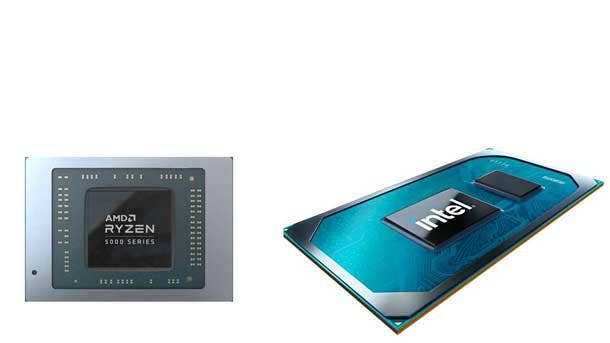
Intel Vs. AMD Driving Data Center CPUs Innovation
Intel, the longtime leader in data center server CPUs, is now facing stiff competition with AMD on a global scale.
AMD recently saw its largest microprocessor share gain yet against Intel in the server market with EPYC processors in the first quarter of 2021, according to the latest x86 CPU market share report from Mercury Research. AMD's server CPU share grew 1.8 points to 8.9 percent, reflecting the chipmaker's report of strong EPYC sales and Intel's decline in Data Center Group revenue.
This heavy competition is driving server CPU performance through the roof which greatly benefits data center customers around speed, agility, and new feature launches. Earlier this year, Intel launched its third-generation Intel Xeon Scalable CPUs, code name Ice Lake. Likewise, AMD launched its third-generation EPYC Milan processors this year, dubbing it as the highest-performance server processor in the industry.
The Takeaway : With server CPUs innovation reaching all-time highs due to competition between Intel and AMD, new use cases and services opportunities in the data center are opening up.
Nvidia To Become A Data Center Powerhouse
In April, Nvidia unveiled an Arm-based data center CPU for AI and high-performance computing it says will provide 10 times faster AI performance than one of AMD's fastest EPYC CPUs, a move that will give the Nvidia control over compute, acceleration and networking components in servers. The new data center CPU, named Grace, creates new competition for x86 CPU rivals Intel and AMD when it arrives in early 2023.
Nvidia's data center product road map ahead will consist of GPUs, data processing units (DPUs) and CPUs, with each product line receiving an updated architecture every two years.
Nvidia has increasingly viewed itself as a "data center-scale computing" company that has led it to pursue optimization of applications at a system level. While the company is seeing high adoption of its GPUs, Nvidia expanded into high-speed networking products last year with its $7 billion acquisition of Mellanox Technologies. Nvidia is also seeking to close on its $40 billion acquisition of Arm, whose CPU designs are being used for Grace. Additionally, Nvidia continues to expand its alliance with data center virtualization and software star VMware.
The Takeaway : Nvidia has the potential to disrupt the entire data center market over the next few years through next-level data center innovation and could forced market consolidation.

Increase In Automation And Robotics Deployments
The global pandemic has accelerated the need to make data center operations less reliant on human intervention aided by the influx of innovation around software automation and artificial intelligence. The data center industry is seeing the benefit of leveraging more intelligent, autonomous systems for simple tasks and distributed environments designed to increase capabilities.
According to AFCOM's recent 2021 State of the Data Center Industry study, more than 40 percent of respondents said they'd be deploying robotics and automation for data center monitoring and maintenance over the next three years. Only 16 percent of respondents said they already have deployed robotics and automation in the data center, while 35 percent expect to deploy these solutions by 2024. Data center automation enables the routine workflows and processes of a data center -- such as scheduling, monitoring, maintenance and application delivery -- to be managed and executed without humans.
The Takeaway : Organizations are investing in automation and robotics in the data center so employees can bring more value elsewhere to the business or for a customer.

Private Equity Pumps More Money Into Data Centers
From private equity firms acquiring data center companies to investing billions to help data center providers scale, there's no doubt that global investment firms will continue to double down on the market in 2021.
Private equity has been fueling data center providers growth objectives around scale and expanding global reach for years. For example, in 2019, private equity accounted for 80 percent of all data center acquisitions, focused on driving sales growth. Investors understand now more than ever that every IT trend -- from enabling data-driven outcomes to a shift to a digital economy -- all require infrastructure.
The Takeaway : In 2021, global investors perceive data centers as one of the best ways to make money as demand for cloud services and remote working skyrockets.

Enterprises Pick Cloud Infrastructure Services Over Data Center Products
Enterprises spent $130 billion on cloud infrastructure services globally in 2020, blowing by the $90 billion enterprises spent on data center products.
Enterprise spending on cloud infrastructure services reached nearly $130 billion in 2020, representing an increase of 35 percent annually, according to new data from Synergy Research Group. Enterprise spending on owned data center hardware and software fell 6 percent year over year to $89 billion. In 2019, the two market segments of cloud infrastructure services and data center hardware and software were almost equal in size at roughly $95 billion each.
While 2020 can be viewed as something of an anomaly due to the COVID-19 pandemic, the trends are "absolutely clear," according to John Dinsdale, a chief analyst at Synergy Research Group.
"It took ten years for enterprise spending on cloud services to catch up with enterprise spending on data center hardware and software, then in 2020 the market for cloud services again soared," said Dinsdale. "In the last ten years, CIOs and business managers have increasingly voted with their wallets and decided that cloud services are the way to go. … And we expect [that] to continue for many years to come."
The Takeaway : Although everyone agrees hybrid cloud is the future, enterprises will continue to spend on cloud infrastructure services compared to, in most cases, traditional data center solutions in 2021 as COVID-19 forced many to rapidly shift to the public cloud.

Green Data Centers; Sustainability Taking Center Stage
The data center industry is in a unique position to accelerate the adoption of sustainable practices like renewable energy and using lithium-ion batteries to reduce climate change at a global level.
Customers, stakeholders, investors and even world leaders are increasingly demanding accountability on climate impact, by creating a compelling business incentive to embrace sustainability. Innovation in energy efficiency, such as with liquid cooling, as well as renewable power is being driven by the industry's largest customers like AWS, Google, Facebook and Microsoft.
In 2021, data center sustainability has become front and center for enterprise customers which is raising the bar for the entire industry. With the digital economy taking shape, investors are also part of the green energy revolution as they seek to build greener IT portfolios. Data center colocation giant's Equinix and Digital Realty have both raised funds using green bonds, with others expecting to follow suit.
The Takeaway : Data center operators will invest in buying and creating more sustainable products from liquid cooling to undersea data centers. It is key to note that there won't be a trade-off in terms of buying the best data center product versus buying a more sustainable solution.

All Eyes On The Edge
With people flocking towards remote working and education, along with an influx of smart technologies inside offices and remote locations – the next data center frontier is at the edge.
Edge-specific data center providers like EdgeConneX are sprouting up while market leading infrastructure and power vendors are creating edge-specific products at rapid pace and scale. Companies from Dell and HPE to Vertiv and AWS are investing in new edge capabilities, services and vertical-specific edge reference architectures.
There is significant demand for edge computing in 2021 fueled by various technologies including AI, Internet of Things (IoT) and the emergence of 5G. Gartner predicts that by 2025, 75 percent of enterprise-generated data will be created and processed outside a centralized data center or cloud. This massive shift puts more emphasis on ensuring a secure, effective and reliable solution inside an edge data centers no matter what size.
The Takeaway : The massive investments from the biggest technology conglomerates in the world show there is a ton of expansion and market opportunities coming to the edge data center market in 2021 and beyond.
The 10 Biggest Dell Technologies News Stories Of 2021
The 10 Biggest Dell Technologies News Stories Of 2021CRNHere's the 10 most important Dell Technologies news stories of 2021—from VMware and Apex to channel partner conflict.
From channel conflict to launching its as-a-service vision with Apex, Dell Technologies captured headlines throughout 2021 as it continued to shed businesses and drive PC revenue to record-breaking heights.
The Round Rock, Texas-based PC and infrastructure giant reported a record-breaking third fiscal quarter of $28.4 billion in sales, up 21 percent year over year, with double-digit sales growth quarter after quarter throughout last year.
A new Dell emerged in 2021, highlighted by the launch of Apex and the spin-off of virtualization and software superstar star VMware.
CRN breaks down the 10 biggest and most important Dell Technologies news stories of 2021 that partners, customers and investors need to know about in the new year.
Historically, Dell Technologies has used Intel CPUs inside its servers and PCs over the years.
However, even with CEO Michael Dell's close friend and former VMware CEO Pat Gelsinger becoming the new CEO of Intel last year, Dell told CRN his company will leverage the most innovative chips inside its hardware moving forward.
In fact, Dell launched several new PowerEdge servers in 2021 that exclusively use AMD chips.
"As the No.1 provider of servers in the world, you can be sure we're taking advantage of all the latest ingredients that allow us to provide the best solution out there," said Dell in an interview with CRN last year. "[Intel CEO] Pat Gelsinger is a great friend and the Ice Lake generation of microprocessors from Intel offer remarkable improvements across all the performance characteristics that are super important. Having said that, there are other microprocessors out there."
Dell's commitment to looking across the broad spectrum of chips manufacturers from AMD and Intel to Nvidia and even chip startups comes during an explosion of innovation and massive market competition between the likes of Intel, AMD, Nvidia and companies making Arm-based processors.
Watch to see just how deep Dell goes with Intel competitors in 2022 and if the latest tech shift affects the two companies' longstanding partnership in any way.

Dell Technologies hired a new co-chief operating officer in 2021 with the hiring of Bain & Company's Anthony Charles "Chuck" Whitten in a move to drive "Dell's next phase of growth."
Whitten joined Dell in August following a 22-year stint at Bain & Company, responsible for running day-to-day operations, shaping the company's strategic agenda and setting priorities across the Dell executive leadership team. He is also tasked with setting up Dell's long-term strategy and plans for emerging markets such as cloud, edge computing, telecom and as-a-service.
"Together [Dell Technologies Vice Chairman and Co-COO] Jeff [Clarke], Chuck and I will shape the future of the company and accelerate the outcomes we can drive for customers," said CEO Michael Dell when announcing the hiring of Whitten. "Chuck's leadership, energy, knowledge and humanity make him the obvious choice to join our team and strengthen our industry leadership."
Whitten, a longtime top advisor for Dell while working at Bain & Company, will report directly to CEO Michael Dell. Over the past decade he focused exclusively on the technology sector, including working alongside Dell's leadership team in recent years to help shape Dell's strategy and growth initiatives.
"Chuck joins the company at a pivotal time to give us greater leadership capacity to cover more ground, assess more opportunities and speed decision making to best serve customers," Clarke said last year.
It will be interesting to see just how big of a public role Whitten will play for Dell in 2022.

In a major blow to channel partners across North America, Dell Technologies in 2021 cut the number of partner account managers (PAMs) in North America, reduced the ranks of veteran channel managers and slashed the on-target earnings (OTE) for rep positions by as much as 30 percent, sources told CRN.
Executives at multiple top Dell partners, all Platinum level or higher, told CRN in September that they have lost highly respected, veteran partner managers that were best in class and have been replaced by PAMs with less experience who are being compensated at a lower pay level.
Having less-experienced PAMs in place could potentially stunt the growth of Dell's channel business, solution providers said, noting that PAMs typically work as the liaison between a channel partner and the vendor, helping push deals and sales opportunities through the channel.
In fact, after several months of having less PAMs or less-experienced PAMs, Dell partners told CRN in late 2021 that the move was exacerbating channel conflict.
"We review our operational models regularly to ensure we're optimizing and simplifying our engagement with partners, which we know is important to both our partners and our sales teams," Dell's Global Channel Chief Rola Dagher told CRN last year.
Partners are hoping Dell hires more PAMs in 2022 who are ready to work intimately with the channel.
After being part of Dell Technologies for over a decade, Integration Platform as-a-Service (IPaas) standout Boomi was sold to private equity firms Francisco Partners and TPG Capital for $4 billion in October.
Dell at the time said it was selling off Boomi, which it acquired in 2010, in order to focus on "high-priority areas" as the new remote workforce continues to take shape stemming from the global COVID-19 pandemic.
"For us, we're focused on fueling growth by continuing to modernize our core infrastructure and PC businesses and expanding in high-priority areas, including hybrid and private cloud, edge, telecom and Apex," said Dell's Jeff Clarke when the company unveiled its planned Boomi sale. "[This is] all designed to help organizations thrive in the do-from-anywhere economy."
Chesterbrook, Pa.-based Boomi aims to drive intelligent use of data on its cloud-based Platform as-a-Service architecture, with more than 15,000 global customers that leverage the technology to discover, manage and orchestrate data.
In a recent interview with CRN, Boomi CEO Chris McNabb said the two companies still plan to work together in the future where it makes sense.
"There's absolutely going to be continued initiatives as it makes sense and as it's valuable for our joint partners and customers," said McNabb. "When we talked about the relationship with Dell, before the sale of Boomi, Boomi was a wholly owned subsidiary within Dell, which means we did everything at an arm's length. They were, in essence, a channel partner to Boomi already. And one of our biggest and most strategic partners—and that's going to continue forward."
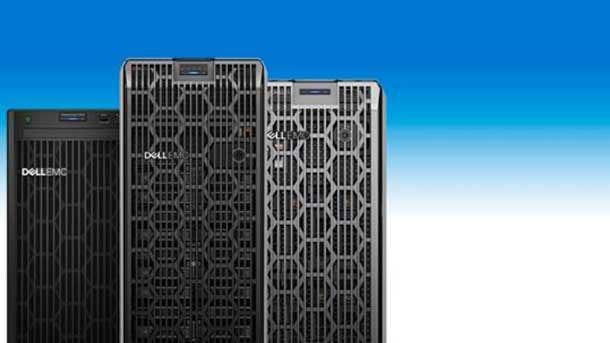
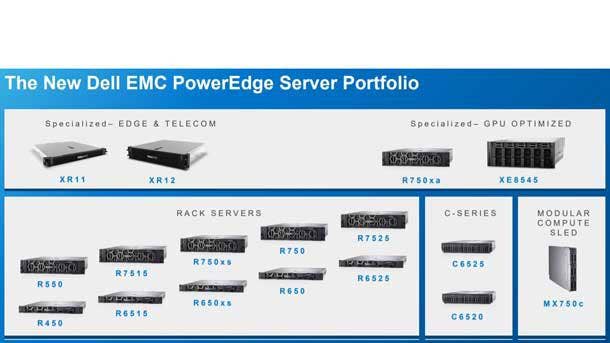
In 2021, Dell Technologies launched more new servers than ever before including more than a dozen new PowerEdge servers and five new rack and tower servers targeting small-and-medium businesses (SMBs) and edge computing use cases.
"We are embarking on a path to get to autonomous compute infrastructure," said Ravi Pendekanti, senior vice president of server solutions product management and marketing at Dell Technologies last year.
"We are building on what I would call workload-specific platforms to make sure we have an optimized platform for specific workloads," said Pendekanti. "We've been hearing customers say they're not just looking for the optimal performance, the key is they're looking for the best price performance."
Dell's new PowerEdge server portfolio leverages a combination of both Intel and AMD processors. Arguably the largest server launched in 2021 is the new Dell EMC PowerEdge XE8545 that combines AMD and Nvidia technology designed for accelerated workloads and ideal for machine learning, HPC and GPU virtualization.
The new PowerEdge servers can be consumed as-a-service through Dell Technologies' consumption-based Apex offering.
With such a massive investment in creating new best-in-class servers, it will be interesting to see if Dell lets these new PowerEdge servers mature in the market or if any new additional servers will be launched in 2022.
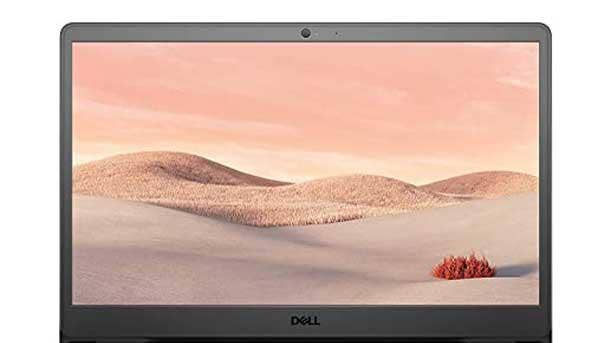
Dell's PC business broke all its previous sales records in 2021 spanning back decades.
Dell's fiscal year 2022, which runs from January 2021 to January 2022 will most likely be a historic year for the company in terms of record-breaking sales led by its red-hot PC business.
The global COVID-19 pandemic had businesses and organizations of all shapes and sizes clamoring in 2021 for products in Dell's Client Solutions Group (CSG) which includes desktop PCs, Chromebooks, notebooks and thin clients.
For its recent third fiscal quarter 2022, Dell's CSG business generated record third quarter revenue of $16.5 billion, representing an increase of 35 percent year over year.
In Dell's second fiscal quarter, CSG sales climbed 27 percent year over year to a record of $14.3 billion.
In its first fiscal quarter, Dell's CSG revenue generated a record first quarter revenue of $13.3 billion, up 20 percent year over year.
Dell's current fourth fiscal quarter will most likely be yet another record-breaking quarter. It will be interesting to see if Dell's roaring PCs growth can be sustained in 2022.
4. Dell Transformed Itself In 2021
Less than three years ago, Dell Technologies was made up of eight businesses under the Dell Technologies umbrella following its historic acquisition of EMC and VMware.
As of 2022, Dell has since sold Integration Platform as-a-Service (IPaas) specialist Boomi, DevOps application star Pivotal Software, and cybersecurity standout RSA for billions of dollars each, while also spinning off its majority stake in VMware in November. Dell Technologies now consists of its roaring PC business Dell, leading storage and server infrastructure company Dell EMC, SecureWorks for cybersecurity, and Virtustream for cloud software and services.
With the global COVID-19 pandemic driving Dell PC sales to new heights while at the same time driving companies' digital transformation plans at lightning speed, CEO Michael Dell is – yet again – transforming his company. As a major part of Dell's transformation, the company has also launched Apex, the company's new as-a-service portfolio, with plans to make Dell's entire product portfolio available as-a-service in the future.
With Dell selling the trio of businesses and the VMware spin-off generating billions for the company, Dell's massive amount of debt stemming from its historic $67 billion acquisition of EMC and VMware is dropping rapidly, which could allow the company to potentially go after a big acquisition to boost either its thriving PC business or its Apex as-a-service push in 2022.
This year could set up the shape and vision for what Dell will look like over the next decade.
Dell Technologies planted its stake in the ground in the as-a-service marketplace with bold plans to eventually sell all of its products in a consumption-based, as-a-service motion through Dell Apex.
"Apex is essentially the creation of the new Dell as we move forward," said Dell's Sam Grocott, senior vice president of product marketing, to CRN last year. "We're transforming internally every facet of the business, as well as externally, as we drive this change to as-a-service consumption model for our entire portfolio."
Dell Apex not only puts the pressure on its main competition HPE GreenLake, but also public cloud titans like Amazon Web Services (AWS). In fact, Dell's worldwide sales leader Bill Scannell told CRN that with Apex's buying options, flexibility and Opex cost savings, Apex can be upwards of 50 percent less expense compared to AWS.
Apex currently consists of Apex Data Storage Services, an on-premise as-a-service portfolio of scalable and elastic storage resources; Apex Cloud Services for as-a-service hybrid or private cloud infrastructure with integrated compute, storage, networking and virtualization resources to simplify cloud adoption; and Apex Custom where customers can create their own on-demand pay-per-use or usage-based IT environment leveraging Dell's entire infrastructure product portfolio.
Dell said it can quickly deliver and deploy Apex solutions so channel partners can focus on driving "higher-value" services on top of Apex as well as up to a whopping 30 percent incentive on the committed contract value on Apex deals.
However, Dell is still working to make Apex a strong channel play.
"Very quickly, we're going to make sure that we can transact Apex offerings through our channel partners," Scannell said in December. Dell followed the same route as some rivals when it brought the Apex as-a-service offering to market first as a direct play with plans to later bring partners onboard, he said.
"We're going to offer everything we do as-a-service. And just like some of my competitors when they first came out with their as-a-service offering, they didn't have the ability to transact that through the channel partner—it had to be direct, and then they gave a back-end bonus," said Scannell.
All U.S. Channel partners now can resell, in addition to hosting and referrals, Apex offerings including Apex Data Storage Services, Apex Hybrid Cloud Services and Apex Private Cloud. Dell Technologies Solution Providers and Storage Authorized Distributors in the U.S. May resell Apex Data Storage Services through the Apex Console.
Apex is one of the largest go-to-market and sales strategy transformations in Dell's 38-year history. It will be interesting to see what new Apex offers Dell launches in 2022 and if channel partners will have more accessibility.
On Nov. 1, Dell Technologies spun off its majority stake in VMware, making VMware an independent company for the first time since 2004.
Dell and VMware had a highly successful go-to-market and innovation strategy from 2016 to 2021, specifically with many joint channel partners. The two companies hope to keep that alive at least for the next five-year through a commercial agreement.
However, with VMware no longer direct attached to Dell, CEO Raghu Raghuram said his company will look to form new and expanded partnerships with other vendors as it looks to become the Switzerland of the multi-cloud world. VMware is likely looking to form new partnerships with public cloud players as well as other hardware providers who may compete with Dell as its now free to do so.
For Dell's part, spinning off VMware helped it achieve an investment grade rating in 2021 to pave the way to attract new types of investors thanks to an improved capital structure. Dell also received over $9 billion in cash dividends from the spin-off that it will use to pay down its core debt balance.
It is key to note that CEO Michael Dell is still chairman of VMware and is the largest shareholder.
It will be interesting to see how Dell and VMware's relationship pans out in the public in 2022 as both will want to keep a friendly arms-distance away from each other. Additionally, Dell could potentially make a major acquisition this year thanks to the spin-off.

The most shocking news CRN discovered in 2021 was that channel conflict between Dell's 27,000-strong direct salesforce and its channel community in both its client systems and infrastructure business consisting of servers, storage and hyperconverged infrastructure.
Some of Dell's most strategic solution providers said conflict with Dell's direct sellers has reached a breaking point, including the direct salesforce increasingly trying to steal new customer opportunities, particularly through controversial deal registration rejections.
"Dell direct is our biggest competitor," said the president of a longtime Dell Titanium partner to CRN in December. "It's not just for client systems anymore. Our biggest issue across the board is the Dell direct mentality, because there are just no checks and balances. … It's just like the Wild West out there."
Partners said channel conflict is manifesting itself as an increase in the number of deals nationwide getting rejected from registration. In some cases, those rejections come because Dell direct reps are going behind their backs promising to give customers a lower price if they buy direct, solution providers told CRN. What's more, partners said they have seen Dell direct reps aggressively attempt to gather account information from channel sales reps in an effort to take new opportunities in existing accounts—such as new infrastructure orders or services sales—direct.
On the client systems side, CRN learned after speaking with over a dozen Dell Technologies channel partners, that Dell's direct sales force had started gunning for a larger share of PC sales in North America which is driving huge conflict with the company's channel community.
Top solution provider executives—all of whom are Platinum or higher partner levels—said they now see Dell as a competitor on PC sales and are exploring their options for taking client systems deals to other OEMs such as HP and Lenovo.
"The way I see it is the Dell direct reps are now in competition with the channel on client systems," said the CEO of a national Dell solution provider who has already seen one of his company's recent Dell PC deals taken direct. "This is a direct kick in the face to the VAR community. Based on how this all plays out, it will force partners to become uber aggressive to try to take Dell out to protect their turf.
When CRN asked Dell's North America President John Byrne last year how he would describe Dell's client systems sales strategy: direct-led, partner-led or channel neutral, Byrne responded: "All of the above. We want both routes. We want both to be growing and both to be growing dramatically." As to whether he directed both channel and direct reps to move Dell's client business to a direct-first sales model versus partner-led, Byrne reiterated, "We want both routes of market to grow—both direct and channel."
Dell partners said the channel conflict began escalating in early 2021 and has since gotten worse over the last several months.
In response, Dell's Bill Scannell, vehemently denied that there is widespread Dell channel conflict. "Are there a couple of partners that have an issue?" asked Scannell rhetorically in an interview with CRN. "I'm sure they do. And as I've said to them on stage at FRS [Field Readiness Seminar, Dell's sales kickoff] and at the partner Advisory Boards—call us. I'm [email protected]—publish that. If people have an issue, call me. Our partners are our most important assets. It's our route to markets. It's why we're growing so well."
Scannell said Dell's channel business has grown faster than its overall business in fiscal year 2022, including in the company's recent third quarter when Dell's total revenue grew 21 percent compared to 34 percent growth from partners. "Partners are growing faster than we are as a company right now. We should be dancing in the streets," said Scannell.
The biggest Dell story of 2021 will continue to be the most important story in 2022.
With partners up in arms about Dell's direct salesforce encroaching more into channel deals and opportunities—as well as a reduction in seasoned partner account managers (PAMs) and the lack of a solid channel strategy for Dell's Apex—the biggest question for Dell in 2022 is if it will try to fix these channel issues or continue with business as usual.
What Are The Future Digital Technology Trends In Wine? New OIV Study Reveals Answers
The robot arm is working in the vineyard. Smart farming and digital agriculture.
gettyRobots in the vineyards, AI wine critics, and block chain 4x4QR codes to track wine and provide transparency to consumers. These are just a few of the topics that were presented by a panel of wine technology experts as part of a recent 2021 OIV study. Entitled 'Digital Trends in the Vine & Wine Sector', the study included a comprehensive survey of wineries in 18 OIV member countries along with in-depth interviews with 21 wine technology experts. The results reveal 9 major technology trends that will shape the future of wine.
According to Pau Roca, Director General of the OIV (International Organization of Vine & Wine), "The study is part of our strategic plan 2020-2024, where digital transformation appears as a catalyst … that will allow the viti-vinicultural sector, its producers and consumers, to adapt to a world threatened by the climate change crisis." The main objectives of digitalization in wine are to: improve efficiency, productivity, and sustainability; provide more transparency to consumers, and create value propositions and new business models.
Nine Major Digital Trends in the Global Wine IndustryFollowing are descriptions of the nine major technologies that are predicted to transform the global wine industry in the future:
1) Wine Internet of Things and Sensor Technology – there will be increased use of technology sensors in the vineyard, winery, distribution and on the wine bottle itself. The data will be compiled on the Internet so it can easily be accessible to employees and consumers.
According to Oliver Oran, CEO of Chainvine, this type of sensor technology will give rise to the Intelligent Wine Bottle, which is: "a bottle of wine moving around and sharing its data." The combination of sensors, block chain, and QR codes will allow the bottle to track its temperature, humidity, location, who it was sold to, and current price. In addition, consumers will be able to learn about the vineyard from which it was sourced, how the vineyard was farmed, how the wine was made, any additives, and wine reviews from both experts and other consumers.
2) Artificial Intelligence (AI) for Wine – more use of smart machines in the vineyard and winery to perform tasks requiring human intelligence. This includes better crop monitoring and management, quality process monitoring in the winery, and more comprehensive wine reviews.
According to Dr. Bernard Chan, Professor of Computer Science Department at the University of Central Arkansas, applying AI to different wine critic reviews "will allow us to create a database that synthesizes all of the different reviews to provide more clarity on taste markers and what makes a 90+ plus wine for a specific region. We are not trying to replace wine critics, but to provide a more comprehensive analysis of wine for consumers."
3) Robotics in the Vineyard and Winery – increased use of robots for fertilizing and harvesting in the vineyard, and inventory control and movement in the winery.
According to Mr. Albert Strever , Senior Lecturer at Stellenbosch University in South Africa, "With lowered costs in recent years, it is believed that in the next three to five years these robotic systems will have a far greater impact on the vine and wine sector."
4) Satellite Imagery and GPS in the Vineyard– though already used by larger wine corporations to monitor the health of vineyards, it is expected that these technologies will be adopted by smaller wineries as well. Using drones and satellites, wineries can easily gather data on ripeness, water shortage, and disease pressure in the vineyard, and act more quickly to preserve quality. It also supports sustainability, because products are only sprayed in the vineyard if necessary.
5) Laser Image Detecting and Ranging in the Vineyard – Using LIDAR, which is a remote imaging technology, the structure of a vineyard can be mapped. This allows wineries to create 3D maps of vineyards, which assists with robot technology in the vineyard, and reduction of accidents. This will help to create the 'Smart Vineyard' of the future.
6) Wine Block Chain Technology – a chain of blocks that contain encrypted information which will improve traceability of wine, and assist with smart contracts. This will be especially useful with wine distribution, so that distributors and consumers know where the wine has been. It will also assist in reducing wine fraud and counterfeit wine.
7) E-Labels for Wine – electronic wine labels that provide extensive information about the wine. Consumers will be able to use their smart phone to access 4x4QR codes that will provide complete information about the vineyard and wine production – even linking to videos. E-Label will provide improved transparency and increased traceability. E-Labels are part of the Intelligent Wine bottle of the future. A few wineries are already experimenting with augmented reality labels, but the E-Label of the future will provide much more information.
8) E-Certificates for Wine – since wine is transported and sold all over the world, there are currently many paper documents that are required to ship and receive wine into different countries, along with tax and tariff documentation. E-Certificates will eliminate paper and allow all of these documents to be accessed digitally.
Oran is excited about this technology, because he also sees it as both good for the environment and a cost-savor. "Currently in the UK, 15 million are spent per year on customs paperwork. With this technology we will be able to get to a world where there are no paper declarations."
9) Smart Wine Storing – because wine is stored in warehouses around the world, there is a need to move to smart warehouses that will help wineries reduce costs and improve efficiency and logistics. This will primarily be centered around increased use of robotics.
Highest Priority Technologies for Global WineriesOne of the interesting aspects of the study was the response of global wineries to a survey question about which technologies they believed to have the highest level of priority importance. The results, in rank order of importance, are:
1) Digitalization of Wine Contents with an E-Label
2) Block Chain Technology
3) Satellite Imagery for Vineyards
4) E-Certificate for Trade and Distribution
5) Artificial Intelligence and Smart Storing of Wine
Ironically, however, when survey participants were asked to give a grade on how well the global wine industry was adopting digital technologies compared to other agriculture sectors, such as coffee, cocoa, and olive oil, the gave themselves the equivalent of a C+. They didn't believe they were very low, or low, but they also didn't rank themselves as high or very high. At least the wine industry recognizes they need to do much more work in order to successfully adopt some of the new technologies that will not only assist with higher levels of efficiency and productivity, but will also enhance sustainability, worker safety, and transparency to the consumer.


Comments
Post a Comment