
10 Best AI Assistants (May 2025)


Every Student Deserves High-Quality Computer Science Education
Imagine you're a ninth grader navigating a world where generative AI, agentic AI and other emerging technologies dominate the headlines. The future feels uncertain, so how do you even begin to decide what you want to be when you "grow up"?
Students today are shaping identities that will guide them through careers spanning the decades ahead. This uncertainty can be daunting, but one thing is clear: Foundational knowledge in computer science will be essential, no matter what paths they choose.
As educators and industry leaders, we must ask: What do students — and their teachers — need to prepare for a future that is still unfolding? How can we ensure that all students develop the computing skills and knowledge necessary to thrive in an increasingly technology-driven workforce?
Computer science is essential, not optional. Every student deserves access; it's a fundamental part of literacy. Just as we teach the alphabet, structure, vocabulary and syntax, we must teach the language of computers. We don't know how students will apply this literacy in their careers decades from now, but we can be confident they will need it.
Computer science is essential, not optional. Every student deserves access; it's a fundamental part of literacy... We don't know how students will apply this literacy in their careers decades from now, but we can be confident they will need it.In our roles on the Career and Technical Education (CTE) team at McGraw Hill, we've been considering how to ensure all students have the computing skills and knowledge they will need to thrive in the exciting (but murky) technology-infused job market of tomorrow. Here's what we believe meaningful computer science education should do to foster a generation of technologically literate learners:
1. Computer science should begin early and continue throughout elementary, middle and high school.Yes, even first graders should be learning computer science, but that doesn't mean seven-year-olds need to spend their days coding in Python. Instead, an early elementary lesson might involve discussing what computers are, how they help people and their role in students' daily lives. Students might match a picture of a technology to its purpose, examine the parts of a computer and experiment with basic controls. They may even have a chance to get hands-on with a robot; there is little that students of any age love more than a robot.
2. Computer science curricula should be turnkey, ready for any educator to pick up and teach.In many schools, computer science instruction is assigned to teachers based on availability rather than expertise. But the knowledge we impart to students in a computer science course is critical for their futures. Therefore, it's also critical that teachers can impart this knowledge with confidence, ease and little prep, regardless of their background or experience.
3. To be intellectually ethical, computer science education should equip students with comprehensive knowledge about AI.When evaluating a computer science curriculum, it's important to consider how it approaches artificial intelligence. All stakeholders in education, from curriculum developers to teachers, have a critical role in preparing students to navigate a rapidly evolving AI landscape with ethical awareness.
A second grader should take computer science even though they aren't entering the "real world" for another fifteen years because knowledge of and familiarity with AI will be critical to their education and to their ability to navigate the world after school. Computer science curricula should give teachers and students plenty of opportunities to ask informed questions and form foundational understandings of what AI is and is not, enabling learners to keep pace with AI as it evolves in potentially unpredictable ways throughout their lifetimes.
4. Computer science should prepare students to thrive in a technology-infused, globally connected world.It's time to challenge common misconceptions about both CTE and computer science courses. While CTE is often seen as a path for non-college-bound students and computer science solely for future tech professionals, these perceptions are outdated. Computer science curricula should go beyond hard skills, like computing, and be for all students, including those who do not plan to enter a computing field.
Digital literacy and computing skills are essential for success in all jobs of the future — and, indeed, today. Quality computer science education should provide students with opportunities to practice life skills such as persistence, collaboration and problem-solving!
Finally, a computer science curriculum developed with a global lens offers students and teachers a particular advantage. As U.S. Schools face challenges in keeping pace with international computer literacy standards, adopting approaches and content from around the world can help bridge this gap. Computers are, in many ways, conduits of an international language, one that many of our students will use to contribute to a global conversation in an increasingly interconnected world throughout their careers. We owe it to them to approach their computer education with open eyes, listening ears and global partnerships.
At McGraw Hill, we are launching new computer science programs with internationally leading computing educators, Binary Logic. The courses support computing from basic skills to advanced theory, serving grades K-12. The high-quality, engaging curriculum is recognized by ISTE and prepares students for certification and emerging areas like AI and robotics. We're immensely proud of the work accomplished by our collaborating international teams and are eager to see these programs making an impact in schools across the United States. You can learn more about the curriculum offerings at www.Mheducation.Com/computing.
Here Are The Emerging Technologies That MSP 500 Execs See Offering The Biggest Opportunities In 2025
Here Are The Emerging Technologies That MSP 500 Execs See Offering The Biggest Opportunities In 2025We asked top managed service provider executives to tell us which emerging technology areas they see as providing the biggest opportunity this year. Here's what 20 had to say.

Emerging Opportunities
A significant reason why small and mid-size businesses and organizations turn to managed service providers is that MSPs can provide leading-edge technologies that SMBs would otherwise not have the expertise or scale to implement on their own and utilize it to full benefit.
That means MSPs must stay on top of the latest IT so they can quickly build competitive solutions and services to meet customers' demands. Savvy MSPs always have their ear to the ground as they try to stay ahead of the technology demand curve.
As part of the CRN 2024 MSP 500 project, we asked MSP executives what emerging technology areas they see as providing the biggest opportunities this year.
If you guessed that artificial intelligence topped the list, you'd be right. Nearly all cited AI and generative AI as one of the biggest – if not the biggest – emerging technology opportunity going into 2025.
"Without a doubt, the biggest opportunity going into 2025 is AI," said Dave Siegal, CTO at Warrendale, Pa.-based MSP All Lines Technology in the company's MSP 500 application. "We're not only looking at AI solutions to streamline and improve our own customer service, but we're also working with our customers across various industries to show how AI can bring value."
Many MSPs pointed to AI and generative AI for a broad range of applications for their clients with cybersecurity, business process automation and data analytics being examples. Others said they expected to use AI and GenAI themselves to boost automation and improve service delivery in such areas as help desk and tech support.
Beyond AI, MSP executives pointed to a long list of new technologies they see generating opportunities this year including cybersecurity and managed security of all types – zero trust network security is a biggie – along with process automation, data analytics, 5G wireless, edge computing and IoT, cloud and digital transformation, and more.
All responses to the emerging technology opportunity question can be found as part of the MSP 500 profiles. The following is a sampling of responses from 20 MSP executives.

Access Systems
Shane Sloan, CEO
Waukee, Iowa
Artificial intelligence via Microsoft Copilot and AI-powered PCs.

ACP CreativIT
Matt Zafirovski, CEO
Buffalo Grove, Ill.
AI continues to be the leading emerging space for us and our clients. From generative AI software to enterprise-grade network and infrastructure solutions and the servers and PCs to power it all, we see enormous opportunity to build and implement game-changing AI solutions for our clients of all sizes.

All Lines Technology
Dave Siegal, CTO
Warrendale, Pa.
Without a doubt, the biggest opportunity going into 2025 is AI. We're not only looking at AI solutions to streamline and improve our own customer service, but we're also working with our customers across various industries to show how AI can bring value. For instance, AI can enhance surveillance with real-time threat detection and predictive analytics. Beyond that, AI is revolutionizing many areas by optimizing processes, improving decision-making, and providing personalized experiences. AI is making a significant impact by increasing efficiency and driving innovation. These advancements highlight the transformative potential of AI, making it the most significant emerging technology in 2025.

Anchor Managed Solutions
Andrew Ouellette, CEO
Saskatoon, Saskatchewan
The biggest emerging technology opportunities for 2025 include generative AI, such as Microsoft Copilot, to streamline workflows and enhance customer engagement; Zero trust security for advanced endpoint and application protection; and cloud automation tools like Azure for scalability and efficiency. Additionally, services like vulnerability scanning, penetration testing, and remediation are critical as companies focus on proactive risk management. AI-driven IT service management, including automated ticketing and event monitoring, presents further opportunities to improve operational efficiency and incident resolution.

Blue Mantis
Joshua Dinneen
Portsmouth, N.H.
We recognize significant opportunities in five key focus areas: Zero trust cybersecurity, business resilience, AI enablement, hybrid cloud optimization, and reimagined workforce. These areas directly address the evolving needs of our clients, who seek to enhance security, adapt to change, leverage AI, optimize cloud infrastructure, and transform their workforce for a digital-first world. By continuously investing in these domains, we drive innovation and provide tailored, cutting-edge solutions that help our clients stay agile and competitive in an increasingly complex business landscape.

Calian IT & Cyber Solutions
Mike Tremblay, President
Houston
Microsoft Fabric is leading the charge in emerging technologies with no end in sight. Its ability to follow the data from start to finish, creating a unified solution for analytics within its comprehensive suite, is a game changer for enterprise companies.

Compucom
Kevin Shank, CEO
Fort Mill, S.C.
To name three: AI augmentation and generative AI, edge computing and IoT, and 5G and beyond.

Dymin Systems
Scott Breitman, CEO
Urbandale, Iowa
Compliance as a service and vCIO/vCISO services seem to have the largest opportunity as technology continues to evolve and our clients' needs are outgrowing their ability to internally manage them. I see that we need to be there to assist them with their growing business needs and how they need technology to work for them.

Effectual
Robb Allen, CEO
Jersey City, N.J.
Agentic AI.

Integrated Computer Services
Mike Cardella, CEO
Glen Rock, N.J.
As we move into 2025, AI-driven cybersecurity, cloud-native solutions, and AIOps present significant opportunities. By leveraging GenAI for advanced threat detection and response, cloud-native platforms for enhanced scalability and resilience, and AIOps for automated IT management, Integrated Computer Services can expand its service offerings to deliver more secure, efficient, and intelligent solutions.
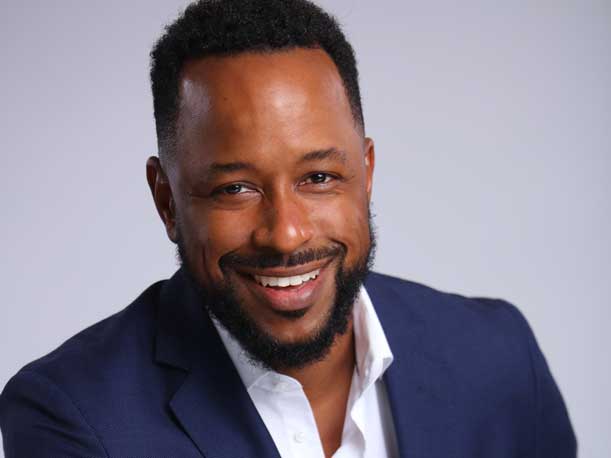
Intras Cloud Services
Kareem Merritt, CEO
Dallas
Leveraging generative AI continues to be the single biggest driver of modernization for our customers. Although many companies we've engaged with haven't fully developed their strategy to integrate it into their product, they realize that they cannot leverage GenAI without fixing the data management and governance issues in their environments. Data-driven decision making enabled by generative AI is the business priority driving our growth.

ITMCX
Arman Eghbali, CEO
Santa Clara, Calif.
The most promising technology opportunity lies in the convergence of AI-based physical security with network security. As cloud-based security firms like Verkada enhance systems with AI, they offer innovations such as door access control via cameras and live alarm monitoring to protect assets. Concurrently, networking security companies utilize AI to analyze extensive datasets, distinguishing normal from suspicious activities. The future potential lies in merging these realms to create comprehensive security solutions that integrate physical and network protection, providing an all-encompassing defense strategy that addresses both tangible assets and digital environments for holistic safety.

Managed Solution
Sean Ferrel, Founder and CEO
San Diego
AI-driven helpdesk: Implementing AI-powered chatbots and virtual assistants can handle a large volume of routine inquiries, providing instant support to end users. This allows human agents to focus on more complex problems, enhancing the overall efficiency of the helpdesk.

Netcomm
Don Rehmel, President
Nicholasville, Ky.
AI is on everyone's mind, but our market is typically a cautious adopter of new technology. So even though we are promoting AI now, any revenue generation will most like present in Q3 and Q4 of 2025. More immediate opportunities exist in providing new antivirus and other cybersecurity tools. Netcomm focuses on cybersecurity training as a means of educating our community, networking and generating revenue.
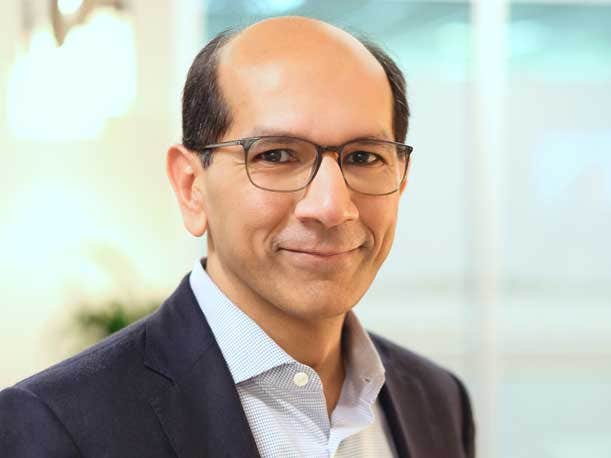
Netgain Technology
Sumeet Sabharwal, CEO
Minneapolis, Minn.
AI-driven cybersecurity, robotic process automation to combat talent shortages, and analytics solutions that deliver actionable insights and enhanced client value.

NetWorks Group
David Howard, President
Ann Arbor, Mich.
Predictive threat intelligence and autonomous defense systems. AI-powered threat detection and response capabilities that can predict and neutralize cyber threats in real-time before they fully materialize. Advanced machine learning algorithms that continuously learn from global threat landscapes, enabling proactive security measures. AI-driven security orchestration that can automatically adapt and respond to evolving cyberattack methodologies. Enhanced anomaly detection using deep learning models that can identify subtle, complex patterns indicative of potential breaches.

Nor-Tech
Burnsville, Minn.
Jeff Olsen, Executive Vice President
We are seeing more demand for traditional HPC server technology that is not specifically built for AI applications.

ProBleu
Nichole Hickman, President and CEO
Bloomington, Ind.
One of the most significant emerging technology areas we see as a major opportunity for 2025 is Zero Trust Network Access (ZTNA). As cybersecurity threats continue to evolve, traditional perimeter-based security models are no longer sufficient to protect businesses in a world where remote work, hybrid environments, and cloud adoption are the norm. ZTNA offers a more robust and scalable approach to securing access, making it a critical focus for organizations prioritizing security and operational resilience.

Stratix
Louis Alterman, CEO
Norcross, Ga.
AI-Powered: AI adoption on mobile devices will grow, enabling personalized experiences and predictive support to enhance engagement and efficiency for their front-line workers.
5G and edge computing: Faster processing and low latency will drive tech upgrades in healthcare and field services where front-line workers are dependent on their device.
Data security: Shared devices, BYOD, and AI are pushing organizations to prioritize advanced security measures and containerization.
Internet of Things (IoT) integration: Increased IoT adoption presents opportunities for managing costs through our Connectivity & Telecom Expense Management portfolio for our customers.

Technology Recovery Group
Sean Kennedy, President
Westlake, Ohio
Managed mobile Endpoint Detection and Response (EDR) is set to be a game-changer in 2025. With the surge in mobile device usage, businesses face increasing threats targeting mobile endpoints. This technology offers proactive monitoring, real-time threat detection and rapid response, ensuring that mobile devices are secured against sophisticated cyberattacks. As organizations continue to embrace hybrid work, managed mobile EDR fills a crucial gap, delivering comprehensive protection, scalability, and adaptability – empowering businesses to stay secure in a mobile-first world.
Computing And Information Technologies
Course Sem. Cr. Hrs. First Year COMM-142Introduction to Technical Communication (WI-GE) (General Education)
This course introduces students to current best practices in written and visual technical communication including writing effective email, short and long technical reports and presentations, developing instructional material, and learning the principles and practices of ethical technical communication. Course activities focus on engineering and scientific technical documents. Lecture 3 (Fall, Spring).
3 CSEC-140Introduction to Cybersecurity
This course will introduce many fundamental cybersecurity concepts. The course will teach students to think about information systems using an adversarial mindset, evaluate risk to information systems, and introduce controls that can be implemented to reduce risk. Topics will include authentication systems, data security and encryption, risk management and security regulatory frameworks, networking and system security, application security, organizational and human security considerations, and societal implications of cybersecurity issues. These topics will be discussed at an introductory level with a focus on applied learning through hands-on virtual lab exercises. Lecture 3 (Fall, Spring).
3 GCIS-123Software Development and Problem Solving I (General Education)
A first course introducing students to the fundamentals of computational problem solving. Students will learn a systematic approach to problem solving, including how to frame a problem in computational terms, how to decompose larger problems into smaller components, how to implement innovative software solutions using a contemporary programming language, how to critically debug their solutions, and how to assess the adequacy of the software solution. Additional topics include an introduction to object-oriented programming and data structures such as arrays and stacks. Students will complete both in-class and out-of-class assignments. Lab 6 (Fall, Spring).
4 GCIS-124Software Development and Problem Solving II (General Education)
A second course that delves further into computational problem solving, now with a focus on an object-oriented perspective. There is a continued emphasis on basic software design, testing & verification, and incremental development. Key topics include theoretical abstractions such as classes, objects, encapsulation, inheritance, interfaces, polymorphism, software design comprising multiple classes with UML, data structures (e.G. Lists, trees, sets, maps, and graphs), exception/error handling, I/O including files and networking, concurrency, and graphical user interfaces. Additional topics include basic software design principles (coupling, cohesion, information expert, open-closed principle, etc.), test driven development, design patterns, data integrity, and data security. (Prerequisite: C- or better in SWEN-123 or CSEC-123 or GCIS-123 or equivalent course.) Lab 6 (Fall, Spring, Summer).
4 MATH-131Discrete Mathematics (General Education – Mathematical Perspective A)
This course is an introduction to the topics of discrete mathematics, including number systems, sets and logic, relations, combinatorial methods, graph theory, regular sets, vectors, and matrices. (Prerequisites: MATH-101, MATH-111, NMTH-260, NMTH-272 or NMTH-275 or a Math Placement Exam score of at least 35.) Lecture 4 (Fall, Spring).
4 MATH-161Applied Calculus (General Education – Mathematical Perspective B)
This course is an introduction to the study of differential and integral calculus, including the study of functions and graphs, limits, continuity, the derivative, derivative formulas, applications of derivatives, the definite integral, the fundamental theorem of calculus, basic techniques of integral approximation, exponential and logarithmic functions, basic techniques of integration, an introduction to differential equations, and geometric series. Applications in business, management sciences, and life sciences will be included with an emphasis on manipulative skills. (Prerequisite: C- or better in MATH-101, MATH-111, MATH-131, NMTH-260, NMTH-272 or NMTH-275 or Math Placement Exam score greater than or equal to 45.) Lecture 4 (Fall, Spring).
4 NSSA-102Computer System Concepts
This course teaches the student the essential technologies needed by NSSA majors, focused on PC and mainframe hardware topics. They include how those platforms operate, how they are configured, and the operation of their major internal components. Also covered are the basic operating system interactions with those platforms, physical security of assets, and computing-centric mathematical concepts. Lab 2, Lecture 4 (Fall, Spring).
3 YOPS-10RIT 365: RIT Connections
RIT 365 students participate in experiential learning opportunities designed to launch them into their career at RIT, support them in making multiple and varied connections across the university, and immerse them in processes of competency development. Students will plan for and reflect on their first-year experiences, receive feedback, and develop a personal plan for future action in order to develop foundational self-awareness and recognize broad-based professional competencies. (This class is restricted to incoming 1st year or global campus students.) Lecture 1 (Fall, Spring).
0General Education – First Year Writing (WI)
3General Education – Ethical Perspective
3General Education – Global Perspective
3 Second Year ISTE-99School of Information Second Year Seminar
This course helps students prepare for cooperative employment by developing job search approaches and material. Students will explore current and emerging aspects of IST fields to help focus their skill development strategies. Students are introduced to the Office of Career Services and Cooperative Education, and learn about their professional and ethical responsibilities for their co-op and subsequent professional experiences. Students will work collaboratively to build résumés, cover letters, and prepare for interviewing. (Prerequisites: This class is restricted to HCC-BS or CMIT-BS or WMC-BS or WMCCR-BS or CMITDU-BS or COMPEX-UND or CMITKO-BS Major students with at least 2nd year standing.) Lecture 1 (Fall, Spring).
0 ISTE-140Web & Mobile I
This course provides students with an introduction to internet and web technologies, and to development on Macintosh/UNIX computer platforms. Topics include HTML and CSS, CSS3 features, digital images, web page design and website publishing. Emphasis is placed on fundamentals, concepts and standards. Additional topics include the user experience, mobile design issues, and copyright/intellectual property considerations. Exercises and projects are required. Lec/Lab 3 (Fall, Spring).
3 ISTE-230Introduction to Database and Data Modeling (General Education)
A presentation of the fundamental concepts and theories used in organizing and structuring data. Coverage includes the data modeling process, basic relational model, normalization theory, relational algebra, and mapping a data model into a database schema. Structured Query Language is used to illustrate the translation of a data model to physical data organization. Modeling and programming assignments will be required. Note: students should have one course in object-oriented programming. (Prerequisites: ISTE-120 or ISTE-200 or IGME-101 or IGME-105 or CSCI-140 or CSCI-142 or NACA-161 or NMAD-180 or BIOL-135 or GCIS-123 or GCIS-127 or equivalent course.) Lec/Lab 3 (Fall, Spring).
3 ISTE-240Web & Mobile II
This course builds on the basics of web page development that are presented in Web and Mobile I and extends that knowledge to focus on theories, issues, and technologies related to the design and development of web sites. An overview of web design concepts, including usability, accessibility, information architecture, and graphic design in the context of the web will be covered. Introduction to web site technologies, including HTTP, web client and server programming, and dynamic page generation from a database also will be explored. Development exercises are required. (Prerequisites: (ISTE-120 or CSCI-140 or CSCI-141 or GCIS-127 or NACA-161 or IGME-105 or IGME-101 or NMAD-180 or GCIS-123) and (ISTE-140 or NACA-172 or IGME-230 or IGME-235) or equivalent course.) Lec/Lab 3 (Fall, Spring).
3 ISTE-499Undergraduate Co-op (summer)
Students perform paid, professional work related to their program of study. Students work full-time during the term they are registered for co-op. Students must complete a student co-op work report for each term they are registered; students also are evaluated each term by their employer. A satisfactory grade is given for co-op when both a completed student co-op report and a corresponding employer report that indicates satisfactory student performance are received. (Enrollment in this course requires permission from the department offering the course.) CO OP (Fall, Spring, Summer).
0 NSSA-220Task Automation Using Interpretive Languages
An introduction to the Linux operating system and scripting in high-level and shell languages. The course will cover basic user-level commands to the Linux operating system, followed by basic control structures, and data structures in both high-level and shell languages of choice. Examples will include interfacing with the underlying operating system and processing structured data. Students will need one year of programming in an object-oriented language. (Prerequisite: GCIS-124 or ISTE-121 or ISTE -200 or CSCI-142 or CSCI-140 or CSCI-242 or GCIS-127 or equivalent course.) Lec/Lab 3 (Fall, Spring).
3 NSSA-221System Administration I
This course is designed to give students an understanding of the role of the system administrator in large organizations. This will be accomplished through a discussion of many of the tasks and tools of system administration. Students will participate in both a lecture section and a separate lab section. The technologies discussed in this class include: operating systems, system security, and service deployment strategies. (Prerequisites: NSSA-241 and (NSSA-220 or CSCI-141 or GCIS-123 or GCIS-127) or equivalent courses.) Lab 2, Lecture 4 (Fall, Spring).
3 NSSA-241Introduction to Routing and Switching
This course provides an introduction to wired network infrastructures, topologies, technologies, and the protocols required for effective end-to-end communication. Basic security concepts for TCP/IP based technologies are introduced. Networking layers 1, 2, and 3 are examined in-depth using the International Standards Organization's Open Systems Interconnection and TCP/IP models as reference. Course topics focus on the TCP/IP protocol suite, the Ethernet LAN protocol, switching technology, and routed and routing protocols common in TCP/IP networks. The lab assignments mirror the lecture content , providing an experiential learning component for each topic covered. (Prerequisites: NSSA-102 or CSEC-101 or CSEC-140 or NACT-151 or CSCI-250 or equivalent courses.) Lab 2, Lecture 3 (Fall, Spring).
3 STAT-145Introduction to Statistics I (General Education)
This course introduces statistical methods of extracting meaning from data, and basic inferential statistics. Topics covered include data and data integrity, exploratory data analysis, data visualization, numeric summary measures, the normal distribution, sampling distributions, confidence intervals, and hypothesis testing. The emphasis of the course is on statistical thinking rather than computation. Statistical software is used. (Prerequisites: Any 100 level MATH course, or NMTH-260 or NMTH-272 or NMTH-275 or (NMTH-250 with a C- or better) or a Math Placement Exam score of at least 35.) Lecture 3 (Fall, Spring, Summer).
3General Education – Artistic Perspective
3General Education – Natural Science Inquiry Perspective
4General Education – Elective
3 Third Year ISTE-260Designing the User Experience
The user experience is an important design element in the development of interactive systems. This course presents the foundations of user-centered design principles within the context of human-computer interaction (HCI). Students will explore and practice HCI methods that span the development lifecycle from requirements analysis and creating the product/service vision through system prototyping and usability testing. Leading edge interface technologies are examined. Group-based exercises and design projects are required. (Prerequisite: ISTE-140 or IGME-230 or NACA-172 or equivalent course.) Lec/Lab 3 (Fall, Spring).
3 ISTE-430Information Requirements Modeling
Students will survey and apply contemporary techniques used in analyzing and modeling information requirements. Requirements will be elicited in a variety of domains and abstracted at conceptual, logical, and physical levels of detail. Process, data, and state modeling will be applied in projects that follow a systems development lifecycle. Object-oriented modeling will be explored and contrasted with data and process oriented modeling. Individual and team modeling assignments will be required. (Prerequisites: ISTE-230 or CSCI-320 or equivalent course.) Lecture 3 (Fall, Spring).
3 Choose one of the following:0
ISTE-498Undergraduate Creative, Innovative or Research Experience (summer)
Students may substitute the second block of traditional co-op experience with creative, innovative or research (iSchool CIR) activities as long as it is directly related to the applicant's degree. Examples include contributing to research projects, supervised participation in entrepreneurial activities, and cross-disciplinary innovation projects not otherwise eligible for co-op. Students will follow a structured application process prior to registering for the course. They will submit a plan of work that outlines the proposed activities, defines tangible goals and deliverables, and identifies a person (faculty member, business contact, etc.) who will provide oversight throughout the term. At the conclusion of the term, students will follow an assessment process similar to that used for traditional co-op as well as (submission of evaluation of responsible oversight party, their daily time and activity logs, the students report and an announced presentation – see iSchool CIR Experience Guidelines on the web at https://ischool.Rit.Edu/ > Student Resources > Co-op Enrollment for further information). (Prerequisites: ISTE-499 or equivalent course.) CO OP (Fa/sp/su).
ISTE-499Undergraduate Co-op (summer)
Students perform paid, professional work related to their program of study. Students work full-time during the term they are registered for co-op. Students must complete a student co-op work report for each term they are registered; students also are evaluated each term by their employer. A satisfactory grade is given for co-op when both a completed student co-op report and a corresponding employer report that indicates satisfactory student performance are received. (Enrollment in this course requires permission from the department offering the course.) CO OP (Fall, Spring, Summer).
CIT Concentration Courses
9General Education – Social Perspective
3General Education – Scientific Principles Perspective
4General Education – Immersion 1
3Open Electives
6 Fourth Year ISTE-500Senior Development Project I
The first course in a two-course, senior level, system development capstone project. Students form project teams and work with sponsors to define system requirements. Teams then create architectures and designs, and depending on the project, also may begin software development. Requirements elicitation and development practices introduced in prior coursework are reviewed, and additional methods and processes are introduced. Student teams are given considerable latitude in how they organize and conduct project work. (This course is restricted to WMC-BS, HCC-BS, CMIT-BS, and 2 ISTE-499 completed or (1 ISTE-498 completed and 1 ISTE-499 completed).) Lecture 3 (Fall, Spring).
3 ISTE-501Senior Development Project II (WI-PR)
The second course in a two-course, senior level, system development capstone project. Student teams complete development of their system project and package the software and documentation for deployment. Usability testing practices introduced in prior course work are reviewed, and additional methods and processes are introduced. Teams present their developed system and discuss lessons learned at the completion of the course. (Prerequisites: ISTE-500 or equivalent course.) Lecture 3 (Fall, Spring).
3CIT Concentration Courses
9General Education – Immersion 2, 3
6Open Electives
9 Total Semester Credit Hours126



Comments
Post a Comment