
Amazon left Roomba with a huge mess to clean up


10 Artificial Intelligence (AI) Companies To Buy Now And Hold Forever
From the growth of self-driving cars to the explosion in generative artificial intelligence (AI) capabilities, it's clear that AI is going to become increasingly integrated in our lives.
Recognizing this fact, investors should keep tabs on leading AI companies since these stocks have the potential to provide sizable returns in the years to come.

Image source: Getty Images.
1. NvidiaNvidia (NVDA -0.42%) is a semiconductor stalwart that pioneered the development of the graphics processing unit (GPU). Invaluable for AI applications, GPUs are also critical components found in data centers, where AI computing occurs.
The company consistently generates strong free cash flow -- just one of many reasons why Nvidia stock is a must-consider for any investor looking to gain AI exposure.
2. AlphabetThe parent company of numerous businesses, Alphabet (GOOG 0.66%) (GOOGL 0.81%) incorporates its large language model (LLM) chatbot, Gemini, into offerings like Google Search and Android phones. Other companies also integrate Gemini into their products, like visual messaging provider Snap and strategy and consulting leader Accenture.
Besides Gemini, Alphabet provides extensive AI exposure through its cloud computing service, Google Cloud.
3. MicrosoftExpanding beyond the software offerings that initially made it famous, Microsoft (MSFT -0.33%) offers AI exposure through its generative AI chatbot, Copilot, found in several Microsoft products like Microsoft 365. Investors also gain AI exposure through the company's cloud computing platform, Microsoft Azure.
Microsoft also provides indirect AI exposure as the company is a major investor in OpenAI, the owner of ChatGPT.
4. Meta PlatformsMeta Platforms (META 0.37%) may be most recognizable as the parent company of Facebook, but the company emerged as a leader in AI tools after developing Meta AI, an AI-powered assistant that's integrated in other Meta apps and built on the Llama LLM.
In June 2025, Meta broadened its AI reach with a $14.3 billion investment in Scale AI, a company pursuing artificial general intelligence.
5. BroadcomLike Nvidia, Broadcom (AVGO -1.12%) is another leading semiconductor stock that has close ties to the AI industry. Data center growth is contributing to strong demand for Broadcom's AI accelerators. For Q2 2025, Broadcom reported over $4.4 billion in AI semiconductor revenue, a 46% year-over-year increase. AI networking represented 40% of AI revenue, a 70% year-over-year gain.
6. AmazonOnce upon a time, Amazon (AMZN 0.97%) was merely a bookseller. Today, however, it has a robust cloud computing business. Launched almost 20 years ago, Amazon Web Services has emerged as a premier cloud computing option, providing the foundation for companies to develop their own AI resources as well as AI services and tools like Amazon Bedrock and Amazon SageMaker.
At the end of 2024, AWS achieved a $115 annualized revenue run rate. For context, Amazon reported total revenue of $638 billion for 2024. Considering its scale and its dedication to innovation, Amazon is sure to remain a premier AI force for years to come.
7. Palantir TechnologiesFrom assisting customers with data integration, to security and compliance, to healthcare advances, to supporting the militaries of the U.S. And allies, software company Palantir Technologies (PLTR -0.34%) developed a sophisticated platform for analyzing large datasets.
In strong financial health, Palantir is consistently profitable and ended the first quarter 2025 with $5.4 billion in cash and cash equivalents with no debt. Plus, it routinely generates strong free cash flow.
8. Taiwan SemiconductorWith its Dedicated IC Foundry business model, Taiwan Semiconductor Manufacturing (TSM -2.12%) produces semiconductors for customers instead of original semiconductors for itself. Nvidia, for example, is a Taiwan Semiconductor customer, turning to it for help in production of the Blackwell GPU, which is used in AI applications.
Illustrating its strong exposure to AI, Taiwan Semiconductor stated that 2024 revenue from AI accelerators represented "close to mid-teens percent" of its total revenue.
9. TeslaMost recognize Tesla (TSLA 3.13%) for its electric vehicles (EVs) but its leadership in AI warrants recognition. For one, the company's EVs have sophisticated autonomous driving capability -- capability that's only expected to increase -- and it's making steady progress in advancing its robotaxi business.
Tesla reported about $5 billion in 2024 AI-related capital expenditures, and it expects about the same in 2025. Considering Elon Musk's enthusiasm for AI, it would be unsurprising if Musk moves toward a Tesla acquisition of his AI start-up, xAI.
10. CoreWeaveProviding infrastructure for AI computing, CoreWeave (CRWV -6.94%) developed a cloud platform to support AI's high computing demands. The allure of its technology is highlighted by its recent $11.9 billion deal with OpenAI to develop AI infrastructure.
CoreWeave is in rapid growth mode. In Q1 2025, it reported revenue of $982 million, a year-over-year increase of 420% resulting from high demand for the company's cloud platform.
Suzanne Frey, an executive at Alphabet, is a member of The Motley Fool's board of directors. Randi Zuckerberg, a former director of market development and spokeswoman for Facebook and sister to Meta Platforms CEO Mark Zuckerberg, is a member of The Motley Fool's board of directors. John Mackey, former CEO of Whole Foods Market, an Amazon subsidiary, is a member of The Motley Fool's board of directors. Scott Levine has no position in any of the stocks mentioned. The Motley Fool has positions in and recommends Accenture Plc, Alphabet, Amazon, Meta Platforms, Microsoft, Nvidia, Palantir Technologies, Taiwan Semiconductor Manufacturing, and Tesla. The Motley Fool recommends Broadcom and recommends the following options: long January 2026 $395 calls on Microsoft and short January 2026 $405 calls on Microsoft. The Motley Fool has a disclosure policy.
Artificial Intelligence Stocks Under $10 - Benzinga
Artificial untelligence (AI) stocks under $10 are publicly traded companies developing or applying AI technologies, with stock prices below $10 per share. These lower-priced AI stocks can present promising investment opportunities due to the AI industry's rapid growth and transformative potential. As AI continues to revolutionize various sectors, these stocks could experience significant appreciation in value. However, investing in AI stocks may come with higher risks than investing in more established companies.
Top Artificial Intelligence Stocks Under $10: Rekor Systems Inc. (REKR)Rekor Systems Inc., a software technology company, was incorporated in 2017 and is headquartered in Columbia, Maryland. The firm provides AI-driven infrastructure solutions for transportation, public safety and urban mobility. Its platforms include the Rekor One AI-powered roadway intelligence platform; Rekor Command, a suite of applications for traffic management centers; and Rekor Scout, automating manual processes through collaborative solutions that keep stakeholders informed and expedite incident response times.
Recently, Rekor Systems introduced Rekor Discover™ - a next-generation solution for AI-based traffic studies and analytics. It also won a patent for its privacy-centered traffic management technology.
As of June 11, 2024, Rekor Systems stock closed at $1.56. The company's focus on AI-driven solutions for public safety and urban mobility aligns with trends toward smart city developments and could present growth opportunities.
SoundHound AI Inc. (SOUN)SoundHound AI Inc. Is a voice AI and speech recognition technology company based in California. Founded in 2005, the company aims to facilitate seamless interaction with technology through natural language. Their products range from voice AI platforms for businesses to consumer apps for music recognition.
SoundHound AI's recent move to pay off its outstanding $100 million debt signaled a robust cash position and solid financial profile. However, despite a significant drop from its all-time high, the company continues to grow and secure new customers. The stock is currently trading at $4.65
SoundHound AI Inc. Could be a promising investment due to its involvement in the rapidly expanding AI market with its specialized audio and speech recognition services, poised for significant growth as adoption increases. The company's unique positioning with its Houndify app offers an attractive alternative for businesses seeking to avoid dependence on larger tech ecosystems.
WiSA Technologies Inc. (WISA)WiSA Technologies Inc. Is a leading innovator in wireless sound technology for intelligent devices and next-generation home entertainment systems in consumer electronics. It is currently priced at approximately $2.67 per share.
Formerly known as Summit Wireless Technologies Inc., the company develops, markets and sells spatial audio wireless technology and is a founding member of the WiSA Association, which defines wireless audio interoperability standards.
WiSA Technologies has made giant strides in expansion in the wireless audio market through innovative licensing deals, including securing five WiSA E licensing agreements with expectations for eight by year-end and a successful $10.0 million public offering.
The company has also regained compliance with the Nasdaq minimum bid price rule, positioning itself for potential growth and continued market presence and making it an attractive consideration for investors.
Ticker Company ±% Price Invest – % $ – Buy stock Parazero Technologies Ltd. (PRZO)Parazero Technologies Ltd. Operates in the industrial sector, specifically within the Aerospace & Defense industry. Founded in 2013 and headquartered in Kiryat Ono, Israel, the company specializes in autonomous parachute safety systems for commercial drones. As of June 11, 2024, its stock is trading at $0.61 per share.
Its SafeAir systems monitor Unmanned Aerial Systems (UAS) flight in real-time, identifying critical failures and autonomously triggering a parachute during emergencies.
The company has just signed a deal to develop and supply customized safety systems to a UAE-based manufacturer of heavy-lift cargo drones. Similarly, it has successfully integrated its safety technology into Draganfly's Commander 3XL Drones for home hospital delivery and emergency response and also completed a drone safety project with a leading Fortune 500 automotive manufacturer, resulting in an additional order.
Parazero serves a diverse range of system manufacturers, resellers and online stores. Its active collaborations and participation in industry events like the Xponential 2024 conference underscore its technical capabilities and commitment to driving innovation in the drone safety systems market.
FiscalNote Holdings Inc. (NOTE)FiscalNote Holdings Inc., currently trading at $1.19 per share, is an Information Technology Services company headquartered in Washington, D.C. Founded in 2013, it provides global policy and market intelligence by combining AI, machine learning and analytics with workflow tools and expert research.
FiscalNote's suite of public policy and issues management products serves a diverse clientele, including Fortune 100 companies, government agencies, law firms, professional services organizations, trade groups and nonprofits.
Investors might find FiscalNote's focus on AI-driven growth, product launches and strategic developments particularly compelling for future performance. Its recently released reports from the 2024 Annual Shareholders Meeting showed significant improvements in Q1 2024 earnings. The report highlighted the company's divestment of Board.Org for $103.0 million, further strengthening its balance sheet. FiscalNote also announced the launch of its FiscalNoteGPT and Co-pilot Creator Reasoning Engine.
Best Online Brokers for Artificial Intelligence Stocks Under $10When looking for the best online brokers to invest in AI stocks under $10, here are some options to consider
Why Invest in Artificial Intelligence Stocks?AI stocks are an attractive option for investors looking to capitalize on the future of technology and its applications in the global economy.
Before investing in AI stocks, several factors that can influence the potential success and sustainability of the investment must be considered.
Investing in AI stocks, like any investment, comes with its share of risks and challenges.
A
Nvidia Corporation and Meta Platforms, Inc. Are known for their stability and earnings growth.
A
OpenAI is the number one company in AI with a valuation of $86 billion and a wide range of customers across various industries.
A
Elon Musk is investing in an AI startup called xAI, which has raised significant funding and is valued at $24 billion
The 10 Hottest SaaS Startup Companies Of 2025 (So Far)
The 10 Hottest SaaS Startup Companies Of 2025 (So Far)Anthropic, MaintainX and Persona are among the companies to make the list.

The creator of one of the most widely used artificial intelligence tools on the market. An AI-powered asset management platform provider. And the vendor of an identity verification platform built for the AI age.
Anthropic, MaintainX and Persona are just some of the startups to make CRN's list of the 10 hottest Software-as-a-Service startup companies of 2025 so far, selected for offering users cutting-edge technology under a familiar subscription-based, updated-online SaaS model.
[RELATED: The 10 Hottest IoT Startups Of 2025 (So Far)]
In November, Gartner predicted that public cloud end-user spending on SaaS would grow 19 percent year over year in 2025, reaching about $300 billion.
For this list, CRN considered companies founded within the last seven years. So while OpenAI raised $40 billion back in March, its 2015 founding date means the organization doesn't appear here.
CRN reporters are publishing other lists highlighting advancement from this year, including the 10 hottest cybersecurity tools and products of 2025 (so far) and Amazon Web Services' 10 coolest new products and tools of 2025 (so far).
Read on for some of the hottest SaaS startups of 2025 so far.

Anthropic
CEO: Dario Amodei
Headquarters: San Francisco
CRN is calling Anthropic—one of the largest AI startups in the world with a current valuation of over $61 billion—a SaaS company for this list in part because of the subscription plan it offers for its flagship Claude large language model, with paid plans that start at $17 per month, $200 billed up front.
The startup unicorn's Claude brings together documents, tools, data and web knowledge to tackle complex questions and build code.
The AI startup raised $3.5 billion in a single Series E funding round in March with plans to use the money to advance its development of AI systems, expand its compute capacity, deepen its research in mechanistic interpretability and alignment, and accelerate its international expansion.
In May, Anthropic introduced Claude Opus 4 and Claude Sonnet 4 with the ability to use tools in parallel, follow instructions more precisely, and sustain performance over long-running tasks with thousands of steps and hours of continual work, according to the company.
CEO Amodei founded the company in 2021, according to his LinkedIn account. He previously worked at AI innovation rival OpenAI for about five years, leaving with the title of vice president of research. He also worked at Google for about a year as a senior research scientist.

Anysphere
CEO: Michael Truell
Headquarters: San Francisco
Like Anthropic, Anysphere has its flagship AI offer Cursor under a subscription model starting at $20 per month with some usage limits.
The startup's Cursor aims to automate coding through predicting changes and surfacing answers from existing codebases, documents and files, according to Anysphere. Programmers can edit in natural language plus update classes and functions with a single prompt.
In June, Anysphere said it raised a $900 million round of funding and exceeded $500 million in annual recurring revenue.
Recent product innovation by the company includes enabling Cursor agents to work on web and mobile and releasing its Fusion model for the Tab code edit prediction and suggestion tool. Fusion promises nearly instant, higher-quality suggestions.
Truell co-founded Anysphere in 2022, according to his LinkedIn account. His resume includes internships with Google, Octant and Two Sigma, plus time as a researcher at Massachusetts Institute of Technology.

Cast AI
CEO: Yuri Frayman
Headquarters: Miami
Lowered cloud costs, improved application performance and more developer operations efficiency are some of the benefits Cast AI touts for users of its automation platform.
The startup automatically right-sizes Kubernetes workloads, scales clusters and redistributes workloads to maximize node use and prevent overprovisioning, according to Cast AI. Users can track cost allocation to CPUs, memory, storage and other resources as well as automate AI model selection.
In May, Cast revealed that it closed a $108 million Series C round of funding that included SoftBank Vision Fund 2. It doubled its customer base between 2023 and 2024 to more than 2,100 organizations.
As a SaaS offer, Cast has free plans for its Kubernetes optimization and database optimization products. But paid plans for the Kubernetes offer start at $200 per month plus $5 per CPU for autoscaling up to 500 CPUs, optimizing up to four clusters, intelligent up and down scaling, rebalancing and more.
Paid plans for the database optimization product start at $250 per month, per instance for unlimited DB instances analysis and optimization, automated query optimization and fingerprinting and intelligent invalidation.
Innovations by the startup this year include fully integrating in-place pod resizing into its autonomous workload optimization engine and launching a database optimizer to improve caching.
Frayman co-founded Cast AI in 2020, according to his LinkedIn account. He previously co-founded Cujo AI in 2015. Comcast bought the company in 2020.
Cast AI is part of CRN's 2025 Partner Program Guide.

ClickHouse
CEO: Aaron Katz
Headquarters: Berkeley, Calif.
An analytical database for generative AI, business intelligence, fraud, cybersecurity and other use cases is the promise of ClickHouse, which targets customers who seek a bring-your-own-cloud deployment model to bring SaaS to life even with strict data residency and compliance requirements.
The company aims to provide users with a fast, cost-effective, resource-efficient real-time data warehouse and open-source database, according to ClickHouse.
ClickHouse unveiled a $350 million Series C round of funding plus a $100 million credit facility led by Stifel and Goldman Sachs in May. ClickHouse has grown fourfold over the past year and exceeded 2,000 customers, including Anthropic and Tesla.
Katz co-founded the startup in 2021, according to his LinkedIn account. His resume includes about six years with Elastic as CRO. He also worked at Salesforce for about 12 years, leaving in 2014 as senior vice president of enterprise sales.
The basic ClickHouse plan is for $25.30 per 1 TB, per month for storage and about 22 cents per unit, per hour for compute. Data transfer for public internet egress starts at about 12 cents per GB, with inter-region egress starting at about 3 cents per GB.
Glean
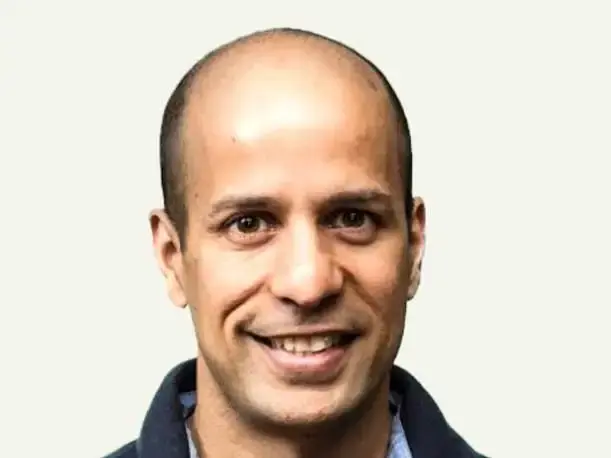
CEO: Arvind Jain
Headquarters: Palo Alto, Calif.
Funds from Glean's $150 million Series F round announced in June will go in part to growing the AI-powered work platform's partner ecosystem, which already includes CRN Solution Provider 500 members Converge Technology Solutions, Ahead, Trace3 and SHI.
The startup wants to enable more integrations and new go-to-market partnerships as part of its channel push, according to Glean. It also expects to spend the money on AI security, enterprise search and agentic AI capabilities within its offers. The vendor passed $100 million in annual recurring revenue in its latest fiscal year.
Glean's product advancements this year include the introduction of Glean Agents, a horizontal agent environment for organizations to deploy AI agents at scale. The platform now powers more than 100 million agent actions annually, with plans to reach 1 billion by the end of 2025.
The vendor has also achieved deeper partnerships with Palo Alto Networks, Dell Technologies and Snowflake, according to the vendor.
Jain founded the company in 2019, according to his LinkedIn account. He previously co-founded Rubrik in 2014 and served as vice president of engineering. He also worked as a distinguished engineer at Google, leaving in 2014 after working on Google Fiber, MapMaker, YouTube and other offers.

MaintainX
CEO: Chris Turlica
Headquarters: San Francisco
MaintainX has set itself up for a summer of growth with a $150 million Series D round of funding to help boost its AI-powered asset management and maintenance technology while expanding its partner ecosystem.
The startup plans to use the funds toward expanding artificial intelligence and machine health monitoring capabilities, enterprise asset management capabilities and advanced predictive maintenance, according to MaintainX. The company counts former HashiCorp CEO Dave McJannet among its investors.
MaintainX's partner program includes systems integrators, technology partners and other channel business models, according to the vendor. The vendor plans to lean on its ecosystem to help with real-time operational data through a sensor-agnostic approach that works with any industrial sensor or control system.
Recent product updates announced by MaintainX include enabling its AI CoPilot to recommend actions based on technician photos of an asset, automatic work order summaries from technician voice notes and the ability to link multiple assets to a single work order and apply shared procedures at once.
Turlica founded the company in 2018, according to his LinkedIn account. His resume includes founding Voo in 2014 and leading the chat platform technologies company as CEO until its sale to Townsquared in 2017. He served as director of product at Townsquared until 2018.
As a SaaS product, MaintainX's paid plans start at $16 per user, per month billed annually for unlimited work orders with attached images, unlimited repeating orders and three months of access to advanced analytics.

Persona
CEO: Rick Song
Headquarters: San Francisco
Persona aims to build an identity verification platform for the AI age, taking into account how well AI can impersonate identities and beat traditional authentication tools.
The startup allows users to dynamically collect passive, active and behavioral signals without sacrificing end-user experience, according to Persona.
In April, Persona said it raised a $200 million Series D round of funding. It processed more than 300 million verifications in 2024 and doubled revenue and customer count year over year.
Product innovation this year has included more Know Your Business services to combat fraud and a partnership with Yardstik for background checks. The company's paid plans start at $250 a month with a minimum contract term of 12 months.
Song co-founded Persona in 2018, according to his LinkedIn account. His resume includes about five years as an engineer at Square.
Persona offers a partner program for resellers, channel partners and other business models, according to the vendor.

Render
CEO: Anurag Goel
Headquarters: San Francisco
Render started 2025 with two major reveals: The startup surpassed 2 million developers on its platform and finished an $80 million Series C round of financing.
The startup bills itself as an improvement over legacy, simplistic cloud platforms that can't scale and support users' technical choices and an improvement over complex, costly public clouds.
The Render platform is language- and framework-agnostic, according to the vendor. It deploys in seconds, updates automatically, runs in a variety of managed environments and communicates across services that use any protocol.
After the funding round announcement in January, Render unrolled product improvements including workspaces compliant with federal health care regulations and single sign on integration with Okta, Microsoft and other identity tool vendors.
Goel co-founded Render in 2018, according to his LinkedIn account. He previously co-founded Crestle in 2016, which sold to Doc.Ai about one year later. He also worked at Stripe for about five years, leaving as head of risk.
Under Render's SaaS business model, paid plans start at $19 per user, per month plus compute costs with 500 GB of bandwidth included, room for collaboration with 10 team members, unlimited projects and environments and more.

SkillCycle
CEO: Kristy McCann Flynn
Headquarters: New York
A SaaS unified human performance and development platform that analyzes progress year-round, analyzes and addresses skills gaps and provides on-demand coaching is the promise of SkillCycle.
The startup has entered the artificial intelligence era with AI-powered analytics and personalized coaching.
A February regulatory filing by SkillCycle revealed that it had raised $2.55 million as part of a $4.75 million round of funding.
McCann Flynn co-founded SkillCycle in 2019, according to her LinkedIn account. She previously worked at consulting firm RGP for about three years.
Paid plans start at $5 per employee, per month.

StackHawk
CEO: Joni Klippert
Headquarters: Denver
StackHawk bills its platform as a premiere application security provider with API discovery, automated testing workloads and actionable remediation guidance.
In May, the startup revealed that it raised $12 million in additional funding to accelerate product innovation. Major updates to StackHawk this year include sensitive data identification during API discovery and an integration with GitLab, according to the company.
Klippert founded the company in 2019, according to her LinkedIn account. Her resume includes working at VictorOps for about five years as vice president of product. Splunk bought the incident management software provider in 2018, and Klippert continued as head of the VictorOps product until 2019.
As a SaaS company, StackHawk offers paid subscription plans starting at $49 per code contributor, per month with a 20-contributor minimum billed annually.



Comments
Post a Comment