
What Is NLP (Natural Language Processing)?


Role Of Artificial Intelligence In Revolutionizing Drug Development
AI integrated with wet lab research enhances cancer drug discovery by predicting protein structures to personalize treatment through multiomics. Highlights:
Advertisement
AI's Role in Cancer Drug Discovery AI integrated with drug development accelerates drug candidate identification for complex diseases like cancer by analyzing large datasets and biological interactions. The AI model is capable of predicting the complex structures of proteins from their amino acid sequences. The model has successfully predicted the structure of almost all 200 million known proteins.Traditional drug development has often relied on trial-and-error processes in laboratories. While AI rapidly analyzes biological data to identify the potential drug for treatment. Researchers can now use AI algorithms to find effective drug compounds in just weeks, which usually takes months or even years.
This speed is crucial, especially in cancer research, where treatments often damage healthy cells along with malignant ones. AI-based tools are also improving the early detection of diseases like ovarian cancer, by analyzing genetic changes and protein biomarkers in blood tests.
Advertisement
Proteins and Multiomics in AI Cancer Research Proteins play a crucial role in disease progression. An AI model has to be trained on a large set of data for its efficiency. The AlphaFold2 model was developed by training it on all known amino acid sequences paired with their determined protein structures.Then the protein data is applied in drug development with multiomics. Multiomics is a technique used to analyze multiple datasets like genomics, epigenomics, proteomics, microbiome, metabolome, and transcriptomics. Advanced systems combine various types of biological and textual data like genetic sequences, 3D models of molecules, structured biological knowledge, and patient records to enhance the precision of personalized treatment for cancer.
AI in Biologics for Cancer Therapy Biologics are drugs made from living organisms and are harder to design than small-molecule drugs due to their larger and more complex structures. While small molecules can be designed directly using AI, biologics require advanced computational techniques to identify effective drug design. However, AI has already contributed to the discovery of 50–60 biologics that are currently under development, with many focused on cancer treatment.Many pharmaceutical companies are using AI and multiomics to develop cancer therapies. ImmunoPrecise Antibodies, a biotechnology company used AI to create bispecific antibodies targeting cancer cells in the tumor microenvironment. Similarly, BostonGene developed an AI-powered platform that finds suitable therapies for patients.
Why AI Cannot Replace Wet-Lab Work While AI is transforming pharmaceutical research, it cannot replace traditional wet lab experiments. Laboratory works are essential for validating AI-generated predictions and to conduct tests. Human knowledge and critical thinking also play an important role in drug discovery and development. AI depends on the data found by researchers after conducting many trial-and-error studies. Thus AI and wet-lab research are both equally important for innovation in drug development.Reference:
Artificial Intelligence In Drug Discovery Market Outlook Report 2025 ...
Company LogoThe competitive landscape of the global AI in drug discovery market is marked by the presence of established pharmaceutical companies, AI technology providers, and emerging startups, all vying to gain a foothold in this rapidly evolving domain. Moreover, companies like IBM Watson Health, Google DeepMind, and NVIDIA, are significant players in the AI in drug discovery market offering advanced AI platforms tailored for drug discovery. For instance, IBM Watson leverages natural language processing and machine learning to mine scientific literature and identify drug targets. Google DeepMind, through its AlphaFold system, has revolutionized protein structure prediction, enabling faster and more precise identification of potential drug candidates.
Artificial Intelligence (AI) in Drug Discovery Market
Artificial Intelligence (AI) in Drug Discovery MarketDublin, May 08, 2025 (GLOBE NEWSWIRE) -- The "Artificial Intelligence (AI) in Drug Discovery Market - Global Outlook & Forecast 2025-2030" report has been added to ResearchAndMarkets.Com's offering.
The Artificial Intelligence (AI) in Drug Discovery Market was valued at USD 1.72 billion in 2024, and is projected to reach USD 8.53 billion by 2030, rising at a CAGR of 30.59%.
The global AI in drug discovery market has witnessed significant growth in recent years as pharmaceutical companies increasingly adopt AI to accelerate and optimize drug discovery processes. AI-powered technologies, including machine learning (ML), deep learning, and natural language processing (NLP), are enabling researchers to navigate the complexity of biological systems, analyze vast biomedical datasets, and identify promising drug candidates faster and at reduced costs.
Leading pharmaceutical firms such as Pfizer, Novartis, Roche, and AstraZeneca have incorporated AI technologies into their research pipelines. These companies are increasingly collaborating with AI startups to drive innovation. For example, AstraZeneca partnered with BenevolentAI to leverage machine learning algorithms for target identification and drug repurposing, showcasing the synergistic potential of AI in pharmaceutical R&D.
Furthermore, startups and specialized AI companies, such as BenevolentAI, Insilico Medicine, Atomwise, Exscientia, and Recursion Pharmaceuticals, are at the forefront in the AI in drug discovery market. These companies have developed AI algorithms capable of analyzing complex biological data, predicting molecular interactions, and accelerating preclinical drug discovery stages.
GEOGRAPHICAL ANALYSIS
The global AI in drug discovery market exhibits significant regional diversity, with each geography offering unique opportunities and challenges. North America leads the global AI in drug discovery market accounting for a global share of over 43% in 2024, driven by its advanced technological ecosystem, robust pharmaceutical and biotechnology sectors, and substantial investments in research and development. The region is home to key players, innovative startups, and extensive academic and research collaborations that position it at the forefront of AI adoption in drug discovery. Also, the U.S. Is home to leading AI companies, research institutions, and pharmaceutical giants, fostering a strong ecosystem for AI integration in drug discovery. Companies such as IBM Watson, NVIDIA, and Google DeepMind are collaborating with pharmaceutical firms to accelerate AI-driven drug development.
Europe holds a significant share in the AI in drug discovery market, driven by its strong research networks, public-private partnerships, and supportive regulatory frameworks. European countries focus on secure data sharing and ethical AI deployment, supported by frameworks like GDPR. This ensures the responsible use of patient data in drug development. Also, strong Biotech Sector: Countries like Germany, France, and the UK are at the forefront of AI-driven drug discovery, with a thriving biotech industry and state-of-the-art research facilities.
Furthermore, the APAC region is witnessing exponential growth in the AI in drug discovery market, fueled by increasing healthcare investments, a growing pharmaceutical sector, and government support. Countries like China, Japan, and India have launched national AI strategies to boost innovation in drug discovery.
Story Continues
For instance, China's "Next Generation Artificial Intelligence Development Plan" prioritizes AI integration across healthcare. Furthermore, the Middle East, Africa, and Latin America represent nascent but promising markets driven by government support and increasing investments in healthcare innovation. These regional dynamics collectively contribute to the global market's expansion, underscoring the transformative potential of AI in revolutionizing drug discovery.
MARKET TRENDS & DRIVERS
Integration of AI with Big Data and Omics Technologies
The integration of AI with big data and omics technologies is reshaping the global drug discovery market. By enabling a deeper understanding of biological systems, improving efficiency, and driving personalized medicine, this trend is creating unprecedented opportunities for innovation and growth. Overcoming existing challenges will further cement its role as a transformative force in the healthcare and pharmaceutical industries. The future of drug discovery is undeniably data-driven, with AI at its core.
Increasing Use of Generative AI Models
The increasing use of generative AI models in the global AI in drug discovery market marks a paradigm shift in how pharmaceutical research and development are conducted. By enabling faster, cheaper, and more precise drug development, these models are creating new opportunities across the healthcare ecosystem. As technology continues to evolve, generative AI is set to redefine the boundaries of what is possible in drug discovery, offering hope for faster cures, more personalized treatments, and a healthier future.
Emergence of AI-Driven Drug Repurposing
The emergence of AI-driven drug repurposing is a game-changer in the global drug discovery market, transforming traditional approaches and creating exciting new opportunities. By reducing costs, accelerating timelines, and addressing unmet medical needs, AI-driven drug repurposing is shaping the future of pharmaceutical innovation. As AI technologies continue to evolve, their integration into drug repurposing will undoubtedly unlock even greater potential, benefiting both the industry and global healthcare systems.
Growing Partnerships between Pharmaceutical Companies and AI-focused Expertise
The growing partnerships between pharmaceutical companies and AI-focused expertise are transforming the global drug discovery landscape. By leveraging AI's capabilities to overcome traditional challenges, these collaborations are creating new opportunities for faster, more cost-effective, and innovative drug development. As the pharmaceutical industry continues to embrace AI, the synergies between these two domains will not only drive market growth but also pave the way for groundbreaking advancements in medicine, ultimately benefiting patients worldwide.
Advancements in Computing Power and Cloud Technologies
The convergence of computing power and cloud technologies has become a driving force in the global AI in drug discovery market. These advancements are empowering pharmaceutical companies and research institutions to revolutionize drug development processes, making them faster, more efficient, and more accessible. As technology continues to evolve, the synergy between AI, computing, and cloud platforms will play an increasingly central role in addressing unmet medical needs and advancing healthcare innovation worldwide.
Rising R&D Costs in Drug Discovery
The rising costs of R&D in drug discovery are pushing the pharmaceutical industry to embrace innovative solutions, and AI is emerging as a powerful enabler. By reducing expenses, improving success rates, and accelerating development timelines, AI is addressing critical pain points in the industry. As the global AI in drug discovery market continues to expand, it holds the potential to not only alleviate financial pressures but also revolutionize healthcare by delivering innovative treatments more efficiently and effectively.
Growing Volume of Biological and Clinical Data
The growing volume of biological and clinical data is a driving force in the global AI in drug discovery market. By enabling the analysis of vast and complex datasets, AI is revolutionizing target identification, drug screening, and personalized medicine. Although challenges remain, the synergy between AI and data promises to unlock new frontiers in drug discovery, improving global health outcomes and addressing unmet medical needs. As this trend continues, AI will remain at the forefront of innovation, reshaping the pharmaceutical landscape.
Increasing Prevalence of Chronic Diseases
The increasing prevalence of chronic diseases has created a pressing need for innovative and efficient drug discovery methods. AI has emerged as a transformative tool, enabling the rapid identification of potential drug candidates, optimizing clinical trials, and accelerating the development of personalized therapies. As chronic diseases continue to rise globally, the adoption of AI in drug discovery is poised to grow, driving advancements in healthcare and improving patient outcomes. With continued investments and collaborations, the global AI in drug discovery market is set to play a pivotal role in addressing one of the most significant healthcare challenges of our time.
KEY QUESTIONS ANSWERED
How big is the global AI in drug discovery market?
What is the growth rate of the global AI in drug discovery market?
Which region dominates the global AI in drug discovery market share?
What are the significant trends in the AI in drug discovery industry?
Who are the key players in the global AI in drug discovery market?
Key Attributes:
Report Attribute
Details
No. Of Pages
454
Forecast Period
2024 - 2030
Estimated Market Value (USD) in 2024
$1.72 Billion
Forecasted Market Value (USD) by 2030
$8.53 Billion
Compound Annual Growth Rate
30.5%
Regions Covered
Global
Market Dynamics
Market Opportunities & Trends
Integration of AI with Big Data and Omics Technologies
Increase in Use of Generative AI Models
Emergence of AI-Driven Drug Repurposing
Growth in Partnerships Between Pharmaceutical Companies and AI-Focused Expertise
Market Growth Enablers
Advances in Computing Power and Cloud Technologies
Rise in R&D Costs in Drug Discovery
Growth in Volume of Biological and Clinical Data
Increase in Prevalence of Chronic Diseases
Market Restraints
High Initial Costs of AI Implementation
Data Privacy & Security Concerns
Regulatory & Ethical Challenges
Key Company Profiles
Other Prominent Vendors
AbCellera
Aitia
BenchSci
BioSymetrics
BPGbio
Centella
Envisagenics
EVAXION Biotech A/S
Iktos
Illumina
insitro
Merck KGaA
Model Medicine
NuMedii
Owkin
Predictive Oncology
Relay Therapeutics
Standigm
Valo Health
Verge Genomics
XtalPi
For more information about this report visit https://www.Researchandmarkets.Com/r/7g0j40
About ResearchAndMarkets.ComResearchAndMarkets.Com is the world's leading source for international market research reports and market data. We provide you with the latest data on international and regional markets, key industries, the top companies, new products and the latest trends.
Attachment
CONTACT: CONTACT: ResearchAndMarkets.Com Laura Wood,Senior Press Manager press@researchandmarkets.Com For E.S.T Office Hours Call 1-917-300-0470 For U.S./ CAN Toll Free Call 1-800-526-8630 For GMT Office Hours Call +353-1-416-8900
Why Drug Discovery Needs Robots And Artificial Intelligence
IntroductionAn Introduction to AI in Drug DiscoveryThe Drug Discovery ProblemRobotics in the LabThe Role of AIChallengesThe FutureConclusionReferences
Discover how AI and robotics are speeding up drug development, reducing failure rates, and ushering in a future where personalized medicines reach patients faster than ever before.
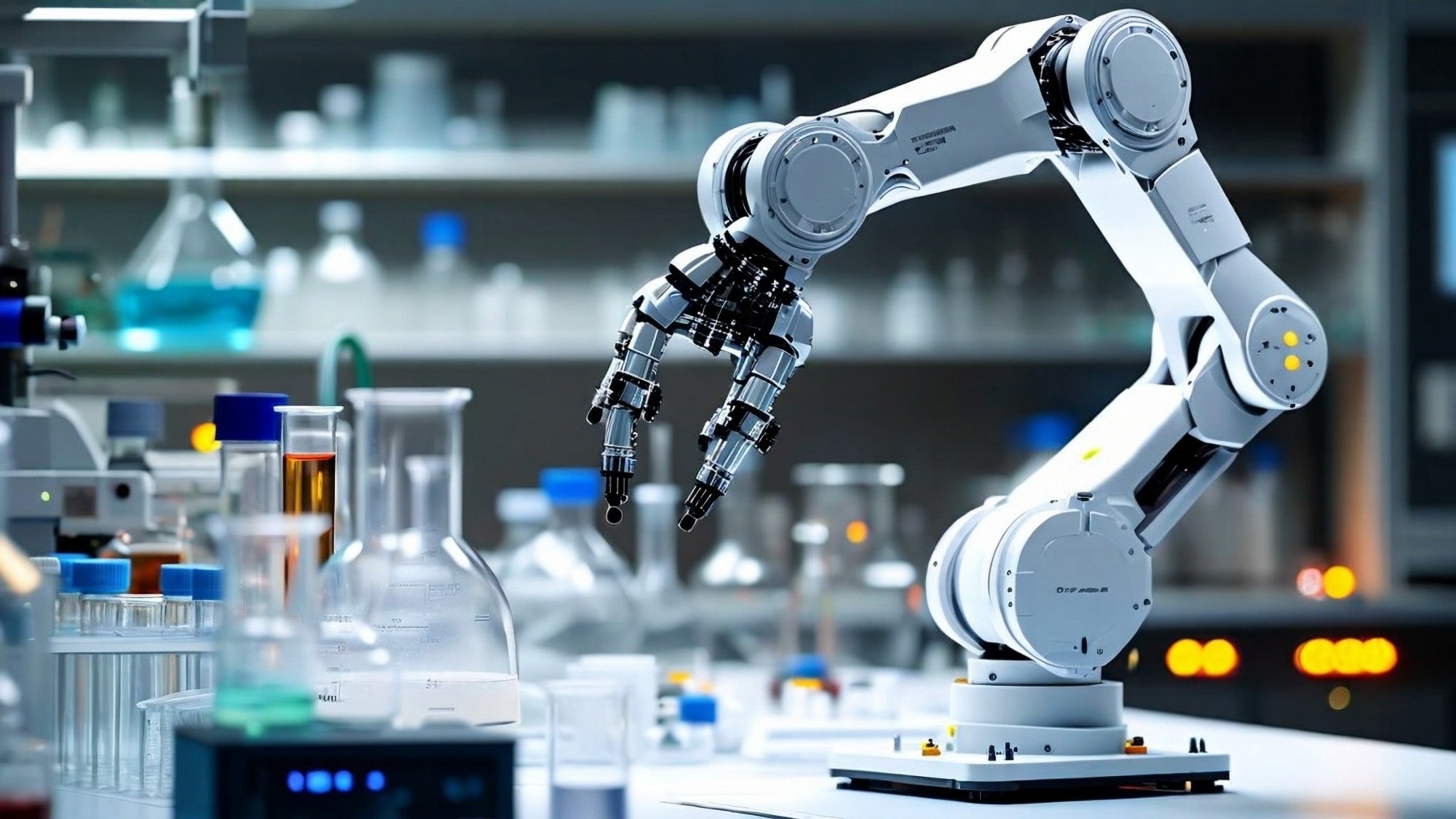 Image Credit: Shutterstock AI Generator / Shutterstock.Com
This article explores how artificial intelligence (AI) and robotics are revolutionizing drug discovery, cutting costs, accelerating timelines, and enabling rapid breakthroughs through automation and predictive modeling.
An Introduction to AI in Drug DiscoveryTraditionally, developing a new drug takes many years and requires a massive financial investment, often involving significant risk and a high likelihood of failure. AI models trained on extensive data sets, sophisticated mathematical models, and advanced computational algorithms have been developed in an effort to directly address these inefficiencies.
Pharmaceutical companies worldwide are increasingly using AI to predict clinical trial outcomes, identify therapeutic targets, and optimize molecular designs. Technologies such as AlphaFold from DeepMind, which accurately predicts three-dimensional (3D) protein structures, and generative AI platforms that design medicinal molecules exemplify the transformative role of AI in drug discovery.
Although the United States Food and Drug Administration (FDA) has not yet approved an AI-generated drug for human use, several compounds developed through AI, such as treatments for fragile X syndrome and idiopathic pulmonary fibrosis, are currently being investigated in clinical trials.1
The Drug Discovery ProblemDrug discovery remains a challenging, costly, and time-intensive process. In fact, current estimates indicate that the approval of a single new drug typically costs about $2.8 billion USD and takes approximately 12 to 15 years.
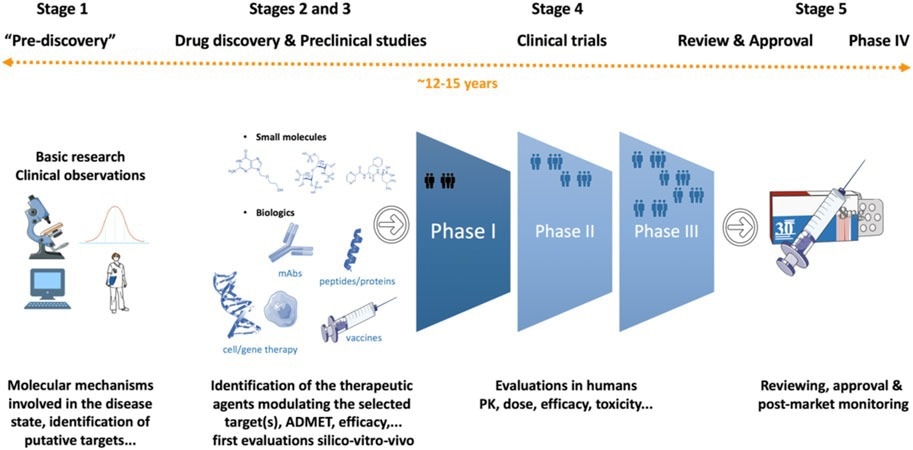
Drug discovery and development. The main stages are represented in a highly simplified manner. The process varies depending on the molecular mechanisms expected to be linked to the disease and the type of therapeutic agents that needs to be developed. The approximate cost is around US $2.8 billion and the time needed to complete the entire process is around 12–15 years.2
The drug discovery process comprises multiple stages, beginning with basic research to identify therapeutic targets linked to specific diseases. Scientists then screen large numbers of potential compounds through computational methods, laboratory assays, and animal models. Despite rigorous preclinical testing, high failure rates persist, particularly during human clinical trials, where many drug candidates fail due to unforeseen toxicity or inefficacy.2
The coronavirus disease 2019 (COVID-19) pandemic highlighted the critical need for accelerated drug development, which required revolutionary technologies like AI to expedite target validation and compound screening. Nevertheless, advancements in this area have been limited due to the lack of complete data, combined with biological complexity and stringent regulatory requirements, all of which emphasize the urgent need for more efficient and innovative solutions to enhance the speed, affordability, and success rate of drug discovery processes.2
Robotics in the LabRobotics has transformed laboratory practices, particularly in drug discovery, by utilizing automated platforms for tasks such as liquid handling and high-throughput screening (HTS). Advanced robotic systems enable precise and rapid screening of vast compound libraries, significantly enhancing efficiency, consistency, and scalability.
At the U.S. National Institutes of Health (NIH) Chemical Genomics Center, robotic automation facilitates quantitative HTS (qHTS), where multiple compound concentrations are simultaneously tested to generate comprehensive concentration-response data. This robotic system incorporates precise liquid dispensers, multifunctional robotic arms, and sophisticated software capable of handling complex assay workflows, thereby reducing manual intervention, reagent consumption, and human error.3,4
Several companies and institutions exemplify this automation trend. Insilico Medicine, for example, combines robotics with AI to expedite compound identification and drug development, whereas Evotec employs robotic platforms for efficient large-scale biochemical screening. Emerging lab automation startups are further advancing robotic technologies by integrating microfabrication and adaptive handling mechanisms to enhance system speed and reliability.3,4
Robotic systems are associated with numerous advantages, including increased throughput, reproducibility, and operational consistency. For example, robotic systems at the NIH have generated millions of concentration-response curves from various assays, which improves the reliability of screening data for chemical probe identification. These platforms are also designed to accommodate diverse assay formats, including cell-based, biochemical, and complex multi-step procedures.3,4
The Role of AIAlphaFold accelerates target identification by accurately predicting protein structure from amino acid sequences. Likewise, BenevolentAI integrates machine learning (ML) algorithms to discover new drug targets and rapidly progress them into clinical trials. Atomwise employs neural networks to perform virtual screening to identify molecules with high binding affinity to targets.5,6
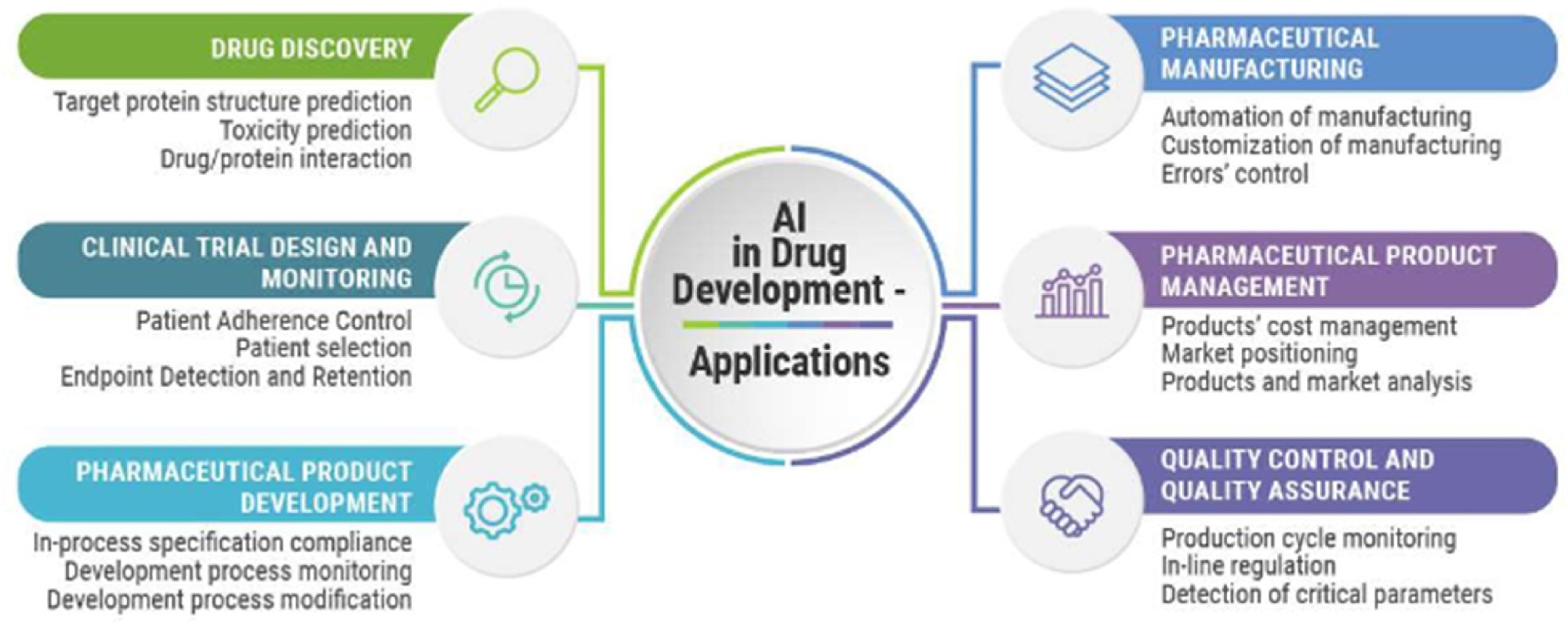 A flow chart of the role of AI in drug development3
Combining AI with robotics creates closed-loop discovery systems that automate and optimize drug discovery cycles. These platforms perform iterative tasks, including hypothesis generation, automated experimentation, analysis, and refinement, which collectively increase research speed, scale, and consistency.5,6
Techniques like graph neural networks and reinforcement learning further enhance molecule generation and optimization. Ultimately, AI-driven drug discovery promises improved efficiency and personalized treatments tailored to individual patient needs, accelerating the translation of novel therapies from laboratories into clinical practice.5,6
How AI is accelerating drug discovery - Nature's Building BlocksBBC StoryWorksPlay
ChallengesComplex neural networks, which are often described as "black boxes," are difficult to validate, which creates uncertainty around their predictions. Addressing these concerns requires the simplification of AI architectures by removing redundant neural network layers without losing accuracy, thereby increasing the transparency and trustworthiness of AI models.5,6
Another ethical concern regarding AI and machine learning (ML) is data bias, which can lead to inaccurate outcomes, especially when algorithms are trained on non-representative or incomplete datasets. This bias has the potential to reinforce health disparities, rather than reduce them.
Regulatory agencies like the United States FDA and European Medicines Agency (EMA) are adapting their frameworks to remain aligned with these rapidly advancing technologies. Nevertheless, recently proposed legislation struggles to address AI's dynamic and self-learning nature, especially in generative models that continuously produce new data.
Ethical questions are also becoming increasingly prominent, including who is responsible when an AI-driven medical error occurs. There is also growing concern over data privacy, algorithmic fairness, and long-term societal impact.7
Flexible yet rigorous regulations, global cooperation, and clear ethical guidelines are essential to ensure the safe, effective, and equitable deployment of AI-ML in healthcare.
The FutureThe pharmaceutical landscape is witnessing a surge in collaborations between technology firms and pharmaceutical companies. These partnerships are fostering innovation through advanced data analytics, automation, and computational modeling. The startup ecosystem is also increasingly contributing fresh perspectives and agile development models.
To thrive in this evolving field, expertise in data science, automation operations, and AI-based modeling is becoming essential. As AI tools are embedded in research workflows, the future promises more efficient, precise, and patient-specific drug development.8
ConclusionsAI and robotics are not replacing scientists; rather, these technologies are empowering researchers to work faster and more efficiently. Together, humans and machines form a hybrid model that is redefining drug discovery.
Whereas scientists bring creativity, clinical insight, and ethical oversight, AI accelerates data analysis, and robotics automates repetitive lab work. This collaboration shortens timelines, reduces costs, and increases precision.
As these technologies continue to evolve, the future of pharmaceutical research will be shaped by a synergy between human intelligence and ML. Ultimately, this hybrid approach promises faster, more personalized, and accessible therapies for patients worldwide.
References


Comments
Post a Comment